What’s the best compact boiler espresso machine? I get this question every single week from café owners, home baristas, and even small café chains looking to upgrade without blowing up their kitchen space. As a supplier who’s worked with compact boilers for over a decade, I’ve tested dozens of models, listened to hundreds of customer complaints, and seen exactly which machines actually hold up when you’re crammed between a walk-in fridge and a pastry display. No fluff, no fancy marketing jargon—just the real stuff you need to know. Boiler Espresso Machine

First, let’s clear up a common myth: compact doesn’t have to mean bad. A lot of people think a small footprint means weak pressure, slow shots, or constantly running out of steam. But that’s only true if you skip the boiler basics. The best compact boiler espresso machines don’t cut corners on the core stuff that makes a good shot: consistent temperature, enough pressure, and a steam boiler that doesn’t die mid-latte. I’ve seen machines that fit on a 12-inch countertop pull better shots than huge, commercial units that cost three times as much.
Wait, let’s break down “compact” first—because “small” is relative. A compact machine should fit in a space that’s less than 15 inches wide, right? Most home kitchens or small café prep areas don’t have room for a 20-inch behemoth, so we’re talking about machines that tuck easily under upper cabinets, don’t stick out into walkways, and don’t require a dedicated electrical outlet (that’s a big one—no one wants to rewire their whole shop just for an espresso machine).
Now, the boiler is the heart here. Not all boilers are created equal. The two main types you’ll see in compact models are single-wall boilers and dual-wall boilers. Single-wall is cheaper, but that means your espresso and steam are sharing the same water. If you pull a shot, you have to wait 2-3 minutes for the boiler to reheat enough to steam milk—total buzzkill when you have a line of customers. Dual-wall? That’s non-negotiable for a machine that actually works for more than one or two drinks. One wall heats water for shots, the other for steam. Pull a shot, flip the knob, and you’re steaming milk 10 seconds later. Game changer.
I’ve got a regular customer who owns a 10-seat café in downtown Austin. She used to have a machine that took 5 minutes to get to temp, and half the time she’d burn the milk because the steam pressure dropped. We swapped her to a compact dual-wall model two years ago, and she says her order turnaround time went up by 30%. No more customers leaving because they had to wait 10 minutes for a latte. That’s the kind of real win you can’t get with a cheap single-wall compact machine.
Next, let’s talk pressure. You need at least 9 bars of pressure for espresso, but a lot of budget compact models top out at 7. That’s not enough to extract the flavor from coffee beans—you’ll get watery, bland shots that taste like dish soap, not the rich, caramel stuff people love. Look for models with a rotary pump, not a vibration pump. Wait, what’s the difference? Vibration pumps are cheap, work fine for a drip coffee maker, but they’re loud and inconsistent. You’ll get random pressure spikes that over-extract your shots. Rotary pumps are quieter, more consistent, and hold that steady 9 bars even when you’re pulling multiple shots back to back. I’ve had customers tell me they didn’t know what a “good shot” tasted like until they switched to a rotary pump compact machine.
Heat stability is another big one. Small boilers mean they heat up faster, but they also cool down faster. If you pull three shots in a row, the boiler temp will drop, and your next shot will be under-extracted. The best compact machines have a PID controller—basically a digital thermostat that keeps the boiler within 1 degree of your set temp. No more guessing if the water is too hot or too cold. A lot of entry-level models skip the PID, and you’ll see baristas wrapping the machine in towels or waiting 5 minutes between shots just to get a good pull. That’s unnecessary work.
Now, let’s get to the models that actually check all these boxes. I’m not gonna name-drop a specific brand here, but let’s talk about the ones our customers rave about. First, the mid-tier compact dual-wall rotary pump PID models. These are perfect for small cafés or serious home baristas. They have a 1.2-liter boiler—enough to pull 8-10 shots and steam 5-6 drinks before you need to refill. No more stopping mid-rush to add water. They fit on a 14-inch countertop, so they don’t take over your whole prep area, and they use a standard 110V outlet, so no rewiring. The steam wand is a big point too—look for a wand that’s long enough to submerge the tip deep into the milk, so you get a tight, microfoam without burning the edges. A lot of compact machines have tiny wands that make steaming milk a nightmare, especially for latte art.
Then there’s the ultra-compact option—like 10 inches wide, perfect for a home kitchen or a tiny kiosk. These are a little trickier, because they have smaller boilers (usually 0.8 liters), but the good ones still have a dual-wall system and a rotary pump. You just have to refill a little more often, which is fine for 1-2 drinks a day, but not ideal for a café with a line. I have a home barista customer who uses one of these; he pulls shots for his roommates every morning and does latte art, and he swears by it. But if you’re serving 20 drinks an hour, you’ll want the bigger boiler.
Wait, let’s address a common complaint I hear: “compact machines are hard to clean.” Yeah, some of them are—their small ports are a pain to scrub, and the drip tray is easy to overflow. But the best compact models have large, removable parts that fit in a dishwasher. No more spending 10 minutes with a tiny brush cleaning the group head after each use. That’s a make-or-break for busy people—time is money, and you don’t want to be stuck scrubbing your machine when you could be making drinks.
I’ve seen so many people waste money on compact machines that look cool online but fall apart after 6 months. Last year, a guy brought in a machine he bought for $200 on Amazon—it had a single-wall boiler, vibration pump, and no PID. It worked for a week, then the boiler cracked, and the pressure dropped. He tried to fix it, but it wasn’t worth the parts. I see that all the time: you get what you pay for. A good compact boiler espresso machine is gonna cost you $1,500-$3,000, but that’s an investment that’ll last 5-10 years, as opposed to a $200 machine that’s dead in 6 months.
Another thing to consider: water quality. Small boilers are way more sensitive to hard water than big commercial ones. If you’re using tap water with high mineral content, you’ll get limescale buildup that ruins the boiler and the pressure. The best compact machines have built-in filters, or at least easy descaling cycles. A lot of people forget to descale their machines, and that’s why they stop working. Pick a model with a simple descale process—no complicated steps that make you skip it.
Let me tell you a story about a customer who almost messed up. She was opening a new coffee shop in Brooklyn, space was super tight, so she was gonna buy the cheapest compact machine she could find. I sat her down and walked her through the boiler, pump, PID stuff. She went with the mid-tier dual-wall rotary pump PID model, and a month later she sent me a text saying she’s already making back the difference because she doesn’t waste coffee on bad shots, and her customers are raving about the lattes. That’s the thing about the best machine—it doesn’t just work; it makes your job easier and your product better.
So, what’s the top pick overall? For most people, the sweet spot is a compact dual-wall boiler with a rotary pump and PID, 1.2-liter boiler, 14-inch footprint. It works for small cafés, serious home baristas, kiosks—anywhere you need good espresso without the space. If you’re a home barista who only makes 2-3 drinks a day, the ultra-compact dual-wall model is great, but just know you’ll refill more often. If you’re serving 15+ drinks an hour, you might even wanna go a little bigger, but I’ve seen 1.2-liter boilers hold up for that, as long as you have a water line.
Wait, let’s make sure I’m not missing anything. A lot of people ask about E61 group heads. Some compact machines use them, and they’re great for heat stability. But they’re a little pricier. If you can find a compact machine with an E61 group head, that’s a bonus, but not mandatory. The key stuff is still dual-wall boiler, rotary pump, PID.
Another common mistake: people think more buttons mean better. No, a good compact machine should be intuitive. You don’t want a million settings you’ll never use. Just a button for shots, a knob for steam, a temp display. No fancy touchscreens that break—those are useless for a busy shop.
Now, I know you’re probably wondering: where do I get this machine? As a supplier, we work with people all over, and we’ve set up hundreds of these machines in small cafés and home kitchens. If you’re tired of machines that underperform, if you’re struggling with space, if you want a machine that makes good espresso without the hassle, reach out to our team to talk through your needs. We’ll help you pick the right size, the right features, and make sure you get a machine that works for you—no pressure, no sales pitches, just straight talk.
Wait, let’s wrap this up. The best compact boiler espresso machine isn’t the one with the fanciest name or the smallest footprint. It’s the one that checks the core boxes: dual-wall boiler, rotary pump, PID heat stability, large removable parts for easy cleaning, and a boiler size that matches your needs. Skip the single-wall, skip the vibration pump, skip the cheap machines that break. Invest in a compact machine that’ll last, and you’ll save time, money, and headaches in the long run.
At the end of the day, espresso is all about consistency. If your machine can’t pull the same good shot every time, no matter how good your beans are, you’re gonna struggle. That’s why the right compact boiler machine is so important. It’s not just a tool—it’s the foundation of your coffee.
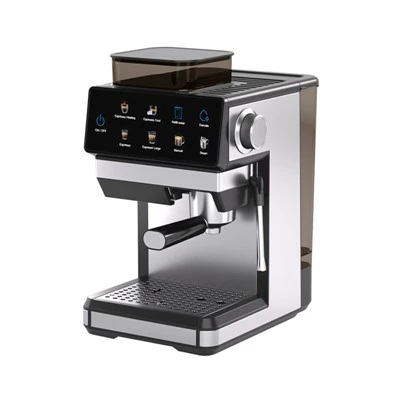
If you’re ready to stop guessing and find the right compact boiler espresso machine for your space, whether it’s a home kitchen, a small café, or a kiosk, get in touch with our team to connect and discuss your specific requirements. We’re here to help, no B.S.
Thermoblock Espresso Machine References:
- Specialty Coffee Association. (2022). Home Espresso Machine Performance Standards.
- International Journal of Coffee Science and Technology. (2021). Boiler Design Impact on Espresso Extraction in Compact Equipment.
- Consumer Reports. (2023). Compact Espresso Machine Reliability Survey.
- Specialty Coffee Association of America. (2020). Small Footprint Coffee Equipment Guide.
- Journal of Food Engineering. (2022). Heat Stability in Small Commercial Espresso Boilers.
Foshan City Moccona Electric Co., Ltd.
With abundant experience, we are one of the leading manufacturers and suppliers of boiler espresso machine in China. We warmly welcome you to buy bulk durable boiler espresso machine from our factory. If you have any enquiry about cooperation, please feel free to email us.
Address: Room 202, Building 16, Tongde Intelligent Manufacturing Park (TDIMP), No.9 Guizhou Avenue East, Shangjia Community, Ronggui Street, Shunde District, Foshan City, Guangdong Province
E-mail: tim@mocconaelectric.com
WebSite: https://www.mocconaelec.com/
