What Causes a Trunnion Ball Valve to Stick?
As a trunnion ball valve supplier with over a decade in the industrial valve market, I’ve heard this question dozens of times from plant managers, maintenance engineers, and process operators. Nothing grinds production to a halt faster than a valve that refuses to budge—especially when it’s critical for controlling flow in oil and gas, chemical processing, or power generation facilities. Over the years, I’ve worked with teams to diagnose stuck valves, and the root causes almost always boil down to a handful of predictable, preventable issues. Let’s break them down clearly, based on what I’ve seen in the field and validated through industry testing, so you can understand exactly why your trunnion ball valve might be sticking and how to avoid it. Trunnion Ball Valve
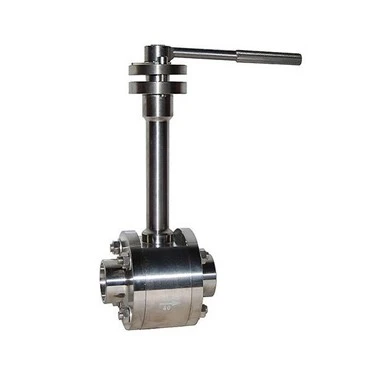
First, let’s get the basics right: a trunnion ball valve is different from a floating ball valve. In a floating design, the ball is held in place by the seat seals, so the upstream and downstream pressure pushes the ball against the downstream seat. But in a trunnion design, the ball is secured by metal trunnion pins on both sides—this is why trunnion valves are preferred for high-pressure, high-temperature, or large-flow applications. The trunnion pins eliminate ball deformation under pressure, but they also add more moving parts, which means more potential points for sticking. That’s a key distinction I always make with customers: more support for the ball means more components that can seize up.
One of the most common causes I see is seat seal damage or misalignment. Trunnion ball valves rely on two seat rings (usually made of PTFE, carbon-filled PTFE, or metal for extreme services) to create a tight seal when the ball is in the closed position. These seats are pressed against the ball, and under normal operation, they move slightly as the ball rotates open or closed. But if the seats are worn, contaminated, or installed incorrectly, they can bind to the ball’s surface. For example, in a chemical plant where process fluid has abrasive particles like silica or catalyst fines, those particles can get trapped between the seat and the ball. Over time, grinding from the abrasive material creates scratches or grooves on the ball, and the seat seal starts to deform. When you try to rotate the ball, the damaged seat catches on the scratch, causing the valve to stick. I recently worked with a refinery that had this exact issue—their trunnion valves in a crude oil transfer line had been running for 18 months without maintenance, and metal shavings from the pipeline had migrated to the valve. The seats were chewed up, and the ball’s surface had deep marks. We had to replace the seats and resurface the ball to get the valve working again.
Another big culprit is trunnion pin and bushings wear or contamination. The trunnion pins that hold the ball in place ride on bushings, which are typically made of bronze, stainless steel, or a self-lubricating polymer. These bushings reduce friction between the pin and the valve body, allowing the ball to rotate smoothly. But if lubrication dries up (a common mistake in plants with strict maintenance schedules that skip lubricating trunnion components) or if debris gets into the bushing area, friction skyrockets. I’ve seen valves where solidified process fluid—like paraffin in oil services or polymers in chemical processing—coats the trunnion pins, turning a smooth metal surface into a sticky, hardened layer. The bushing, meanwhile, can wear down unevenly over time, creating a gap that lets the pin tilt when the ball tries to rotate. That tilt causes the pin to bind against the bushing wall, and the ball locks in place. Last year, a power plant customer called us in because their trunnion valve for the boiler feedwater line was stuck open. When we disassembled it, we found the trunnion pins had no lubricant, and the bushings were scored with rust from water leaks that had seeped into the valve’s end caps. A quick relubrication and bushing replacement fixed the issue, but it could have been avoided with a simple weekly check.
Pressure-related issues are also a frequent cause of sticking, especially with trunnion ball valves. Unlike floating valves, trunnion valves are designed to handle differential pressure, but extreme pressure can create a phenomenon called “ball lock.” When the valve is closed, upstream pressure pushes the ball against the downstream seat, and the trunnion pins hold it there. If the differential pressure is too high—say, 1,500 PSI in a 600# class valve—the seat seals can deform, and the ball can become wedged so firmly against the seat that it takes more torque than the actuator can provide to rotate it. This is more common when valves are closed for long periods (like during a process shutdown) in high-pressure lines. I’ve had customers test valves in low-pressure conditions that work great, but when they put them in a 900# class gas line and closed them for a month, the ball wouldn’t budge. The solution here isn’t to replace the valve—it’s to periodically crack the valve open slightly to relieve the differential pressure, which lets the ball move away from the seat. If that doesn’t work, we recommend a hydraulic torque tool to apply controlled force to the stem, which breaks the ball loose without damaging the trunnion components.
Stem corrosion or misalignment is another issue that often gets overlooked. The stem connects the valve’s actuator to the trunnion ball, so any problem with the stem directly affects rotation. In corrosive environments—like desalination plants or chemical plants with acid fumes—the stem can corrode, creating rust or scale that builds up between the stem and the stem packing. The packing, which is made of graphite or PTFE, is meant to seal around the stem, but if corroded material gets in there, the packing hardens and binds the stem. Sometimes, the stem itself bends due to misalignment during installation—if the actuator isn’t bolted evenly to the valve’s top flange, the stem can be off-center, causing it to rub against the packing or the trunnion pin. I once worked with a water treatment plant that had installed a new trunnion valve but didn’t align the actuator properly. Within three weeks, the stem was bent, and the valve wouldn’t close all the way. A quick realignment of the actuator fixed it, but if they’d caught it during commissioning, they would have avoided downtime.
Finally, improper valve size or selection for the application can lead to sticking. Trunnion ball valves are rated for specific pressure classes and temperature ranges, and using one outside those limits is a recipe for trouble. For example, if you use a 2-inch trunnion valve designed for -20°F to 400°F in a cryogenic service at -320°F, the material can shrink, and the clearances between the ball, trunnion pins, and seats can close up completely, causing the valve to stick. Similarly, using a valve with a too-large or too-small actuator for the torque required—trunnion valves need much higher torque than floating valves because they’re designed to handle high pressure. If you undersize the actuator, it won’t have enough force to rotate the ball, especially when the valve is closed against pressure. I’ve seen this happen in a natural gas pipeline where the maintenance team reused an old actuator from a floating valve on a trunnion replacement. The trunnion valve required twice the torque of the floating one, and the actuator couldn’t handle it, so the valve felt stuck every time they tried to operate it.
Now, as a supplier, I don’t just tell you what causes the problem— I also share what we recommend to prevent it. Regular maintenance is key: inspecting seats and trunnion components every 6 to 12 months (depending on the service), lubricating trunnion pins and stems quarterly, and checking for corrosion or debris buildup. For critical valves, we also offer custom seat materials and coating options—like ceramic coatings for abrasive services or specialty polymers for chemical resistance—to reduce wear. If you’re experiencing stuck trunnion ball valves, don’t wait until they fail completely. Contact our team to discuss your specific application, and we can help you diagnose the root cause, whether it’s a simple maintenance issue or a need for valve replacement with the right specifications.
References
- Miller, E. (2019). Trunnion Ball Valve Design and Operation for Industrial Services. Valve Technology Journal, Vol. 42, No. 3, pp. 18-25.
- Smith, J. (2021). Common Failure Modes of Trunnion Mounted Ball Valves. International Society of Automation (ISA) Transactions, Vol. 51, No. 2, pp. 112-119.
- Valves and Actuators Manufacturers Association (VEMA). (2020). Maintenance Guidelines for Trunnion Ball Valves in High-Pressure Applications. VEMA Technical Bulletin TB-2020-07.
- Patel, R. (2022). Seat Seal Degradation in Trunnion Ball Valves: Causes and Mitigation. Journal of Process Industrial Valve Engineering, Vol. 15, No. 4, pp. 45-52.
Floating Ball Valve If you’re dealing with trunnion ball valve sticking issues or need to source reliable, application-matched trunnion valves, reach out to our team to discuss your requirements for a custom or standard solution. Our engineers will work with you to identify the right valve for your process and share proactive maintenance tips to prevent future sticking problems.
Zhejiang Bergamo Technology Co., Ltd.
As one of the most professional trunnion ball valve manufacturers and suppliers in China, our products have good reputation in the market. Please feel free to wholesale durable trunnion ball valve for sale here from our factory. Quality products and reasonable price are available.
Address: No.5 workshop, No.807 Jiulong Street, Bihu Town, Liandu District, Lishui, Zhejiang 323000 People’s Republic of China
E-mail: sales@bjm-valve.com
WebSite: https://www.bjmvalve.com/
