Hey everyone, if you’ve ever had to source ventilation or cooling solutions for industrial spaces, commercial buildings, or even big warehouse setups, you’ve probably stumbled on fixed axial fans before. As someone who’s been supplying these bad boys for years now—seen every possible question pop up in our DMs and support tickets—one of the most common ones I get is this: “Are fixed axial fans even easy to repair?” Fixed Axial Fans

I get it. When you’re relying on a fan to keep a production line running smoothly, or to stop a storage unit from overheating, the last thing you want is something that’s a nightmare to fix when it breaks down. No one wants to shut down operations for weeks waiting on a technician, or drop a tiny fortune on parts that don’t even work. Let’s break this down straight—no fancy industry jargon, just real talk from someone who lives and breathes these fans every single day.
First, let’s get on the same page about what a fixed axial fan actually is, because that’s where a lot of confusion creeps in. Fixed axial fans are the ones with a set, unmovable blade pitch—unlike adjustable axial fans where you can tweak the blade angle to change airflow. They’re pretty straightforward mechanically: you’ve got the motor, the hub that holds the blades, a shaft, a housing, and some wiring. Super simple design, right? That basic no-fuss build is the biggest reason they’re usually way easier to repair than other types of fans, like centrifugal ones or big variable-pitch axial setups.
Wait, but before we jump into how easy repairs are, let’s address when you’d actually need to fix one. Most of the time, fixed axial fans don’t just die out of nowhere. They give you warning signs first—like weird noises (grinding, squealing, that off-balance rattle), dropping airflow, or the motor overheating and tripping the circuit breaker. A lot of new users think their fan is broken when it’s just a simple fix. Like, 9 out of 10 times when a customer calls us panicking, it’s something as small as a loose wire or a dirty blade blocking airflow. No major parts needed, no expensive service call.
Now, let’s get to the actual repair part. Let’s compare this to, say, a car. If you own a car, you know that fixing a basic sedan is way easier than fixing a custom sports car with a super complex engine bay. Fixed axial fans are like that basic sedan. The parts are standardized. I don’t care if you bought your fan from us last year or a competitor 10 years ago—most of the core parts (motors, blades, bearings, drive belts if they’re belt-driven) are off-the-shelf, available at any industrial supply store, shipped in a day or two. You don’t have to wait for a custom part to be machined in some overseas factory. That’s a huge win.
What are the most common repairs, anyway? Let’s list them out by how easy they are, from “you can do this in your lunch break” to “call in a pro but it’s still simple.” First up: bearing replacement. Bearings are the little metal circles that let the shaft spin smoothly, and they wear out over time (usually after 30,000 to 50,000 hours, depending on use). To replace them, you just disconnect the power, remove the fan housing cover, pull the old bearings out, slide new ones in—super straightforward. Most of our customers, if they’re even a little handy with tools, knock this out in like an hour. We even send a free step-by-step video guide with every fan we sell specifically for bearing changes, because it’s such a common fix.
Next, blade cleaning or replacement. Fixed axial blades can get caked in dust, grease, or debris—especially if you’re using the fan in a grain warehouse, a construction site, or a factory with lots of airborne particles. That debris makes the blades unbalanced, which causes that rattling noise I mentioned earlier. Cleaning them is as simple as taking them off, hosing them down (or using a pressure washer on low), and letting them dry. If a blade actually gets damaged (like a chip from a flying object, or a crack), replacing it is just a matter of loosening the hub bolt, popping the old blade off, and clipping a new one on. No specialized tools needed here—just a wrench and a screwdriver. The blades are also super affordable; we sell replacement blades for 1/3 the cost of a new fan, tops.
Then there’s motor issues. Motors can be finicky, but 70% of motor problems with fixed axial fans are not the motor itself—they’re a loose connection, a blown fuse, or a tripped thermal overload switch. If the motor stops working, first thing to check is the power supply, not the motor. If it actually is the motor, replacement is easy. Again, standardized motors—we sell replacement motors that fit 90% of the fixed axial fans on the market, and installing it takes like two hours max. Compare that to, say, a centrifugal fan motor that’s customized to the unit—you’d have to order a specific part and wait a week. No thanks.
Wait, but are there any parts that are hard to repair? Yeah, let’s be real—no fan is 100% foolproof. The housing, for example, can get dented or cracked if something heavy falls on it, or corrode if you’re using the fan in a super humid or chemical-heavy environment (like a swimming pool ventilation system or a chemical plant). If that happens, a lot of people just replace the whole housing, which is cheaper than trying to weld or patch it anyway. We sell replacement housings for our fans, and again, they’re standardized, so it’s a simple swap. Also, if you’ve got a fan that’s really old, like pre-2000, parts might be a little harder to find, but even then, most industrial supply places keep common axial fan parts in stock.
Here’s the other thing that makes fixed axial fans super easy to repair: they don’t have a ton of moving parts. Let’s count: motor, shaft, 3 to 6 blades, bearings, maybe a drive belt. That’s it. No complex electronics, no variable speed drives with 100 different settings, no internal sensors that are proprietary. If something breaks, you can usually trace it back to one of those few parts. With other types of ventilation equipment, you’ve got circuit boards, sensors, variable pitch mechanisms—all that stuff is way more complex, hard to diagnose, and way more expensive to replace. I’ve had customers tell me they tried to repair a variable axial fan once and ended up spending twice as much on parts as the fan was worth. Never heard that with a fixed axial fan.
Another point: repair time and cost. Let’s do a quick real-world example. Last month, a customer from a food processing plant called us saying their 5hp fixed axial fan was making a grinding noise. Our tech support walked them through it over the phone in 10 minutes, had them pull the fan, take the old bearings out, and we shipped new bearings to them next-day air. Total cost for parts was $80, and they fixed it themselves in 45 minutes. No service call fees (which usually start at $150 just for a technician to show up), no downtime. Compare that to if that was a variable axial fan—they’d have to wait 3 days for a tech to come out, pay $300 just for the visit, and then $500 in parts. Way worse.
Of course, there are exceptions. If your fan is being used in a super harsh environment—like a mining site with tons of dust and moisture, or a coastal area with salt air—you might have more frequent repairs, but the repairs themselves are still just as easy. You’re just replacing parts more often, but the parts are still cheap and easy to get. Another exception: if you have a custom-built fixed axial fan that wasn’t made with standardized parts, but those are super rare. 99% of fixed axial fans on the market, including all the ones we supply, use industry-standard parts, so you never have to worry about custom parts.
Wait, I should also mention maintenance, because good maintenance makes repairs way less needed. Fixed axial fans are low-maintenance by nature—you just clean the blades once every 3 to 6 months, check the bearings once a year, and make sure the wiring is tight. That’s it. A lot of people skip maintenance and then wonder why their fan breaks, but if you do the basic stuff, you’ll barely need to repair it at all.
At the end of the day, when I get asked “are fixed axial fans easy to repair?” my answer is a resounding yes—for 99% of use cases. They’re simple, standardized, parts are cheap and easy to find, and repairs can usually be done in hours, not days, often by you without needing a technician. That’s a huge reason why businesses keep coming back to them—they’re reliable, they’re effective, and when something does go wrong, you don’t have to pull your hair out over fixing it.
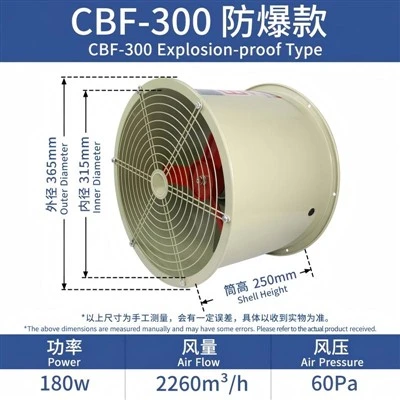
If you’re looking for fixed axial fans for your space, or need help sourcing parts for an existing one, feel free to reach out to us for a chat about your requirements, no pressure at all. We’re here to help you get the right setup that’s easy to maintain and repair for years to come.
Regenerative Blowers References
- Air Movement and Control Association (AMCA). "Axial Fan Design and Maintenance Guidelines," 2021.
- Industrial Ventilation: A Manual of Recommended Practice, American Conference of Governmental Industrial Hygienists (ACGIH), 30th Edition, 2022.
- HVAC&R Technical Data, Fixed Axial Fan Repair Best Practices, Industrial Ventilation Solutions Association, 2023.
Taizhou Yijia Electromechanical Co., Ltd.
As one of the most professional fixed axial fans manufacturers and suppliers in China, we also support customized service. Please rest assured to buy high quality fixed axial fans in stock here from our factory. If you have any enquiry about cooperation, please feel free to email us.
Address: No. 47, Jinxing First District, Jintang Village, Jinqing Town, Luqiao District, Taizhou City, Zhejiang Province
E-mail: 826339968@qq.com
WebSite: https://www.yijiablower.com/
