If you’ve ever stood on a production floor watching a pneumatic cylinder jerk to a halt mid-cycle, or seen compressed air leak so fast your energy bill spikes, you know how much a tiny component like a U-Cup seal can derail your entire operation. As someone who’s spent the last 12 years working as a U-Cup seal supplier—sitting across from maintenance managers, design engineers, and plant supervisors in shops from automotive assembly lines to food and beverage processing plants—I’ve seen firsthand that choosing the wrong seal isn’t just a small mistake. It’s a costly one, and one that’s completely avoidable. U-Cup Seal

Today, I’m pulling back the curtain on how we at our company guide customers to pick the right U-Cup seal for their pneumatic cylinders. No sales jargon, no pushy upsells, just the real-world lessons we’ve learned after helping 1,000+ customers fix (and avoid) seal-related headaches.
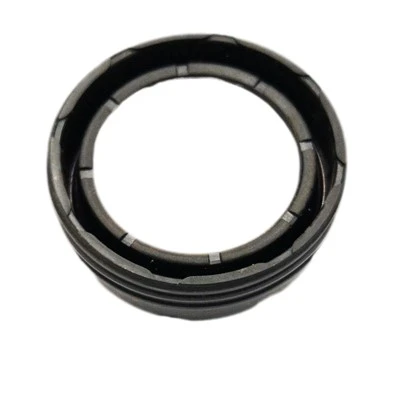
First, let’s make sure we’re on the same page: what exactly is a U-Cup seal, and why is it so critical for pneumatic cylinders? A U-Cup is a type of rod seal shaped like a U—hence the name—designed to sit in the cylinder’s gland and seal the gap between the moving piston rod and the static cylinder barrel wall. It’s responsible for two non-negotiable jobs: keeping pressurized air inside the cylinder so it can push/pull the rod, and blocking external contaminants (like metal shavings, dust, or food residue, depending on your application) from getting in and damaging the cylinder’s internals. The wrong U-Cup here? You get air bypass, reduced cycle speed, premature rod wear, and eventually, a cylinder that needs rebuilding or replacement—at a cost that’s 10–100x more than the seal itself.
The first, and most important, step in selecting the right U-Cup is to map your application’s specific operating conditions. I can’t tell you how many times a customer has walked in and said, “I need a 2-inch U-Cup for my standard air cylinder,” and we’ve had to pause because “standard” means nothing until you dig into the details. Let’s break down the non-negotiable operating variables we always ask customers to share first:
Temperature is the big one I see missed all the time. A customer working in a cold storage facility (-20°C) grabbing a seal rated for 100°C for their pneumatic gripper is going to have a bad time. Most standard U-Cups use nitrile rubber (NBR), which works well between -30°C and 110°C—perfect for general-purpose industrial use, like assembly lines in mild climate control shops. But if you’re working in extreme temps? We’ve got alternatives: hydrogenated nitrile (HNBR) for up to 150°C, ideal for ovens, dryers, or plastic molding lines where cylinders are near heat sources, or fluorocarbon rubber (FKM) for down to -40°C, used in cold storage, outdoor equipment in Northern climates, or applications where you have contact with oils or chemicals that eat through NBR. I once had a customer in a metal stamping plant who tried a standard NBR U-Cup for a cylinder feeding steel sheets near a tempering oven—within 2 weeks, the seal cracked from constant heat exposure, and they were replacing cylinders weekly. Swapping to our HNBR U-Cup cut their seal failures to zero. That’s the kind of fix that makes a difference fast.
Next, pressure and cycle rate. Pneumatic cylinders work at pressures from 2 bar to 10 bar for most standard uses, but high-pressure applications (like heavy lifting or clamping) can hit 15 bar or more. For high pressure, a standard single-lip U-Cup won’t hold up—we recommend a dual-lip U-Cup that adds extra support along the seal’s legs, preventing it from being pushed into the cylinder’s gland (a problem called extrusion, which is like a rubber toothpaste tube being squeezed too hard). Cycle rate matters too: if your cylinder is moving 10 times a minute (standard for assembly lines) or 60 times a minute for high-speed packaging, you need a seal with low friction to avoid overheating. For high-cycle applications, we’ll often point customers to a U-Cup with a polished lip or a thin profile—less surface area means less friction, less heat, and longer seal life. I worked with a snack packaging company last year that had their seal failing every 3 months on a high-speed pick-and-place cylinder; switching to our low-friction NBR U-Cup extended seal life to 18 months, cutting their maintenance time by 6 hours a week.
Contaminants and media exposure are the final big operating condition piece you can’t skip. If your cylinder is in a food processing plant, where it might get splashed with water, cleaning chemicals, or food residue, you need a U-Cup that’s FDA-compliant—standard NBR can leach chemicals or break down with harsh sanitizers, leading to contaminated product and safety risks. For these, we offer our FDA-approved EPDM U-Cups, which resist water and sanitizers and meet food safety standards. If your application is outdoor, like construction equipment or agricultural machinery, you’re dealing with dust, dirt, and even mud—so you might want to add a secondary Wiper Seal, but the U-Cup itself needs a hard, durable lip that won’t tear from particulate contamination. For metalworking or machining plants with metal shavings, we recommend a U-Cup with a slightly stiffer material to withstand impact from small metal particles that can get past the wiper.
Once you’ve got those operating conditions mapped, it’s time to match the U-Cup to your cylinder’s physical dimensions and gland design. This sounds basic, but I’ve seen so many mix-ups here—customers ordering a U-Cup with the correct inner diameter (for the rod) and outer diameter (for the cylinder bore) but getting the gland width wrong, which leads to the seal not sitting properly and leaking. Let’s break down the key dimensions you need: rod diameter, cylinder bore diameter, and gland depth/width. The gland is the groove machined into the cylinder wall where the U-Cup sits—every cylinder has a specific gland size, so you can’t just guess. If you’re replacing an old seal, take measurements of the old U-Cup (don’t just order by part number, because sometimes part numbers are standardized across manufacturers but dimensions vary slightly) and cross-reference with our technical charts. If you’re designing a new cylinder, make sure your gland has enough depth for the U-Cup’s leg height—too shallow, and the seal won’t expand to seal properly; too deep, and it can shift, leading to misalignment and wear. Another thing to check: is your gland retrofittable? Some older cylinders have non-standard gland sizes, so we have custom-molded U-Cups that fit retroactively without needing to machine the cylinder. That’s a big win for shops that don’t want to invest in new cylinder parts.
Material-specific characteristics are another layer that makes a huge difference, beyond just temperature. Let’s talk about each common material and where they shine:
- NBR (Nitrile Rubber): Our workhorse. Affordable, resistant to oil and general hydraulic/pneumatic fluid, good elasticity for sealing at low pressures. Perfect for 90% of general industrial applications, like assembly lines, conveyors, and standard pneumatic grippers.
- HNBR (Hydrogenated Nitrile): A step up from NBR, with better heat resistance (up to 150°C) and better chemical resistance. Ideal for high-temperature environments or applications where seals are exposed to mild oils.
- FKM (Fluorocarbon): Best for extreme temperatures (down to -40°C, up to 200°C) and harsh chemicals. More expensive, but worth it for applications like oil and gas, chemical processing, or outdoor equipment in very cold or hot climates.
- EPDM (Ethylene Propylene Diene Monomer): Great for water resistance and food/sanitizer exposure, which is why we use it for our FDA-compliant seals. Not as good with oils, so it’s only for specific applications like food and beverage, water treatment, or pharmaceutical manufacturing.
Surface finish of the cylinder rod is often overlooked, but it’s a key factor in seal life. The rod is the part that rubs against the U-Cup’s lip every time the cylinder moves. If the rod has a rough surface (Ra value higher than 0.8 μm), the U-Cup’s lip will tear or wear out prematurely, even if you picked the perfect material. For most applications, a rod with an Ra of 0.2–0.5 μm is ideal—polished enough to reduce friction, but not so smooth that the seal can’t create a proper pressure barrier. If you have a rod that’s already worn (Ra higher than 1.0 μm), we can recommend a harder U-Cup material that’s more resistant to wear from rough rod surfaces, or suggest rod polishing as a quick fix before replacing seals.
Now, let’s talk about common mistakes we see all the time, that even experienced maintenance teams make. First, “over-sealing” or “under-sealing”. A lot of people think a thicker U-Cup is better for higher pressure, but that’s not always true. Too thick, and the seal takes up too much space in the gland, leading to too much friction and heat, which shortens life. Too thin, and it can’t resist extrusion at high pressure. We always size the U-Cup’s cross-section to match the pressure: for pressures under 7 bar, a 3 mm cross-section works; for 7–15 bar, a 5 mm cross-section is better. Another mistake is skipping secondary seals. A U-Cup is a primary rod seal, but it needs a wiper on the outside to block contaminants, and sometimes a backup ring (usually made of PTFE or polyurethane) for high-pressure applications to prevent extrusion. We see customers run without backup rings in 10 bar applications, and within weeks, the U-Cup is extruded into the gap between the rod and cylinder wall, leading to catastrophic failure.
Wait, one more thing: if you’re working in a dynamic application, like a cylinder that moves frequently or under heavy load, consider a spring-loaded U-Cup. The spring inside the seal applies constant force to the lip, even when pressure is low or the cylinder is stationary, preventing leakage during extended hold positions. We recommend spring-loaded U-Cups for applications like clamping cylinders, where the cylinder needs to stay pressurized for hours or days without leaking, or for low-pressure applications (under 2 bar) where a standard U-Cup can’t create enough sealing force.
Let me give you a real example to tie all this together. A few months back, we worked with a customer in a woodworking plant, where they had pneumatic cylinders running their saw blades that were failing every 2–3 weeks. They told us their application: 10 bar pressure, 50 cycles per minute, exposed to wood dust and sap, temperatures around 25°C. Their old seal was a standard 2-inch NBR U-Cup. We measured their rod, cylinder bore, and gland, and also tested their rod surface—wait, their rod had an Ra of 1.2 μm, which was rougher than ideal, plus they had no backup ring. We recommended a 5 mm cross-section HNBR U-Cup (since wood sap can be slightly chemical-resistant) with a backup ring, and a slightly stiffer lip to resist the rough rod. We also suggested adding a polyurethane wiper to block wood dust. The result? Their seal life jumped to 12 months, and they cut their cylinder replacement costs by 80%. That’s the kind of tailored solution that works, not just ordering the cheapest U-Cup off the shelf.
At the end of the day, selecting the right U-Cup seal isn’t about picking the most expensive one, or the one with the fanciest label. It’s about matching the seal to your specific application’s conditions, dimensions, and demands. I’ve seen too many companies throw money at cylinder replacements when all they needed was the right seal, sized and material-matched correctly.
If you’re dealing with seal leaks, premature failures, or just want to upgrade your pneumatic cylinder performance, we’re here to help. Our team has decades of experience working across every industry, so whether you’re in food and beverage, automotive, construction, or any other sector, we can walk you through the selection process, provide custom sizing if you have non-standard cylinders, and share real-world case studies from similar applications. We don’t believe in one-size-fits-all seals, and we won’t pressure you to buy something you don’t need.
Reach out to our team to discuss your pneumatic cylinder seal requirements and get tailored guidance.
SC Rubber Oil Seal References:
- "Seal Selection Handbook" by Parker Hannifin Corporation, 2021
- "Pneumatic System Design and Maintenance" by B.S. Dhillon, 2019
- "Rubber Seals for Industrial Applications" by John C. Wilson, 2018
- "Gland Design for Rotary and Linear Seals" by the American Society of Mechanical Engineers (ASME), 2020
Jinhua Haobo Sealing Technology Co., Ltd.
As one of the most professional u-cup seal manufacturers and suppliers in China, we’re featured by quality products and good price. Please rest assured to buy customized u-cup seal made in China here from our factory. For pricelist, contact us now.
Address: No.89, Hucheng Street, Tangxi Town, Wucheng District, Jinhua City, Zhejiang Province
E-mail: 245149293@qq.com
WebSite: https://www.haoboseal.com/
