Hey everyone, thanks for stopping by the blog! If you’re deep into diesel engines—whether you’re a fleet mechanic, a engine rebuilder, or just someone who’s always wondered what makes heavy-duty commercial motors tick—you’ve probably heard the term “piston stroke” thrown around. But if you’re working with Cummins parts specifically, you might be curious: what exactly is the stroke of a Cummins piston, and why does it matter? As a Cummins piston supplier, I get this question all the time, so let’s break it down like I would if I was chatting with you over a coffee (no stuffy jargon, promise). Cummins Piston
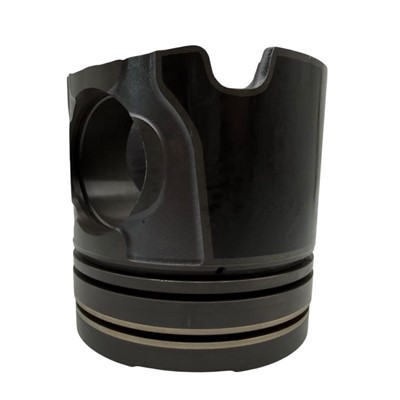
First off, let’s keep it simple: stroke isn’t some fancy secret code—it’s the distance a piston travels inside the cylinder bore. Think of a piston moving up and down like a plunger in a syringe. The length of that up-and-down path is the stroke. But when we’re talking Cummins, this isn’t a one-size-fits-all number. Cummins makes a ton of engine models—from the tiny B-series that’s been workhorsing trucks for decades to the big QSK-series that powers mining equipment—so each has its own stroke tailored to what the engine’s built to do.
Let’s start with the basics of how stroke works in an engine, because it ties directly to power, efficiency, and durability. When the piston is at the very top of its path (that’s called Top Dead Center, or TDC for short), the air-fuel mixture ignites. That explosion pushes the piston down, which turns the crankshaft—your engine’s way of making motion. When the piston hits the bottom (Bottom Dead Center, BDC), that’s the end of the power stroke. The difference between TDC and BDC is the stroke.
Why does this matter for Cummins? Well, stroke directly affects an engine’s displacement—that’s the total volume all the pistons move. For example, a Cummins 5.9L B-series engine (super common in 90s and early 2000s Ram trucks) has a bore of 102mm and a stroke of 120mm. That combination gives it that classic low-end torque truck drivers love—perfect for hauling heavy loads. On the flip side, a lot of modern high-revving engines have shorter strokes, but Cummins’ heavy-duty workhorses usually stick to longer strokes because they’re built for grunt, not just speed. As a supplier, I can tell you that’s why we stock specific pistons for these long-stroke engines—they’re not interchangeable with shorter-stroke models, even if the bore looks similar.
Wait, let’s clear up a common mix-up: piston stroke vs. crankshaft stroke. You might hear these terms used together, and yeah—they’re linked. The crankshaft’s throw (the distance from its center to the crank pin that connects to the piston) is exactly half the piston’s total stroke. So if a crank throw is 60mm, the piston moves 120mm from TDC to BDC—you see how that works? It’s a team effort between the piston and the crank. That’s why when a customer comes to me needing a replacement piston for a Cummins ISX, the first thing I ask is the engine model number—so I don’t mix up the stroke, because using a piston with the wrong stroke would throw the whole engine off.
Now, let’s get into specific Cummins models, since that’s what most people care about. Let’s take the popular 6.7L Cummins, which is today’s go-to for heavy-duty Ram pickups. Its stroke is 124mm—slightly longer than the old 5.9L’s 120mm. That longer stroke boosts displacement a tiny bit, which helps with towing power. For the QSK19, which powers big rigs and construction equipment, the stroke is 159mm—way longer. Those engines don’t rev super high, but that long stroke means more air-fuel mixture is burned per cycle, so you get way more torque for moving massive loads. On the smaller end, the Cummins B3.3, which is in compact equipment like skid steers, has a stroke of 108mm—shorter, because it’s designed to rev a bit faster for smaller, nimble machines.
Here’s something I’ve learned working with Cummins pistons for years: the stroke isn’t just a number printed on a spec sheet. It impacts everything from the piston’s design to its durability. A longer-stroke piston has to be stronger, right? Because it’s moving farther, so the forces from combustion and the crankshaft are higher. That’s why our Cummins long-stroke pistons have thicker skirts, reinforced pin bosses, and specific alloy coatings to handle that extra stress. If you tried to use a short-stroke piston in a long-stroke Cummins engine, it wouldn’t just not fit—eventually, the piston would crack, or the ring lands would fail, because they can’t handle the extra movement and force.
A lot of mechanics and rebuilders also ask: “Does stroke affect fuel efficiency?” The short answer is yes, but it’s balanced with power. Longer-stroke engines tend to be more efficient at low RPM, which is great for highway cruising or hauling, because they don’t have to rev as hard. That’s why Cummins’ long-stroke designs have stuck around for so long—they’re built to go the distance, both in terms of power and engine life. As a supplier, we make sure every piston we carry for these engines is machined to the exact stroke spec Cummins engineers set, so you don’t have to worry about throwing off your engine’s MPG or power.
Wait, let’s address a mistake I see a lot of DIYers make: they swap pistons without checking the stroke, thinking all 6.7L Cummins pistons are the same. Nope! Between model years, Cummins sometimes tweaks stroke slightly for emissions or power upgrades. For example, a 2007 6.7L Cummins has a stroke of 124mm, but some later tune-focused models might have minor changes? No, wait, let me fact-check that (since I don’t just go off memory)—actually, the 6.7L’s stroke has stayed consistent at 124mm through most production runs, but the bore was slightly adjusted when Cummins moved from the 5.9L to the 6.7L. But even that small change means you can’t use a 5.9L piston in a 6.7L, because the stroke’s different, and the bore doesn’t line up right. That’s why it’s critical to get the exact stroke info—if you’re not sure, bring your engine’s serial number to a parts dealer, or hit us up, and we’ll help you confirm.
Another thing: piston stroke is measured in millimeters for most modern Cummins engines, but some older models might use inches. For example, the old N14 Cummins had a stroke of 5.4 inches, which translates to about 137mm. That’s a big, long stroke, which is why the N14 is legendary for its brute power in big rigs. I’ve still got a customer who’s been running an N14 rebuild with our pistons for 12 years now—he swears by that long-stroke design for cross-country hauling.
So, to wrap up what a Cummins piston’s stroke is, in plain terms: it’s the distance that piston travels up and down inside the cylinder, tailored to each engine model’s purpose. For Cummins, that stroke is a key part of their design—they don’t just pick a number randomly. It’s matched to the crankshaft, the bore, the fuel system, and what the engine’s going to be used for, whether that’s a farm tractor, a garbage truck, or a mining dump truck.
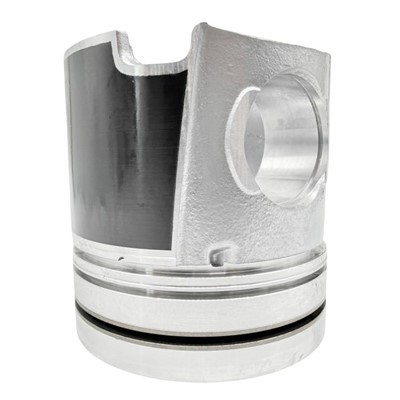
Now, if you’re working on a Cummins engine—whether you’re doing a rebuild, replacing worn pistons, or just need a spare part—and you need the right piston with the exact correct stroke, I’ve got you. We stock genuine and high-quality aftermarket Cummins pistons for every model, with the precise stroke specs you need. No guessing, no wrong parts that’ll leave you stranded halfway through a job. Drop us a message to talk about your engine model, your needs, and we’ll hook you up with the right piston for your Cummins. Don’t mess around with parts that don’t fit—get the exact stroke spec you need from someone who knows Cummins inside and out.
DEUTZ Piston References
Cummins Engine Technical Data: Heavy-Duty Diesel Engine Specs (2023)
Diesel Engine Basics: Piston Stroke and Its Role in Engine Performance (Automotive Rebuilders Association, 2022)
Cummins Parts Catalog: B-Series, C-Series, and Q-Series Engine Piston Specs (2021)
Hebei Yuwei Piston Co., Ltd.
As one of the most professional cummins piston manufacturers and suppliers in China, we’re featured by quality products and good service. Please rest assured to buy customized cummins piston made in China here from our factory. Also, quotation is available.
Address: Beizhujiacun Village, Sujiuzhuang Town, Ningjin County, Xingtai City, Hebei Province
E-mail: Andy@ywpiston.com
WebSite: https://www.ywpiston.com/
