Hey there, if you’re deep in the weeds of running a data center, you know how much rides on keeping signals tight, consistent, and headache-free. I’ve been in the signal distribution amp game for a decade now, and let me tell you—most data center operators don’t realize just how much of a workhorse a good distribution amp (we call ‘em DAs around here) is until they’re scrambling to fix a signal dropout or sync issue at 2 a.m. Today, I’m breaking down the real, hands-on advantages we’ve seen our customers get, straight from the trenches, no sales fluff, just what works. Signal Distribution Amplifier
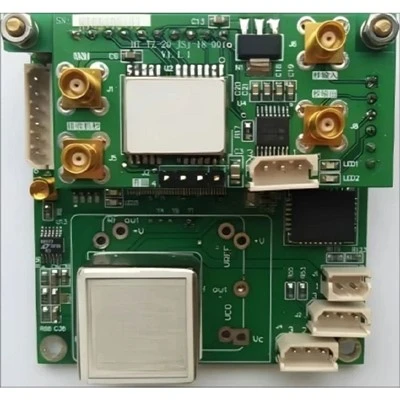
First off, let’s cut the jargon: a signal distribution amp’s whole job is simple, but critical. You take one input signal, amplify it (without mucking up its quality), and split it to multiple outputs. If your data center is running servers, storage arrays, or the network gear that ties it all together, that basic function solves so many problems you probably deal with every day.
Let’s start with one that trips up even seasoned data center folks: signal degradation. You know that thing where if you daisy-chain too many switches or run cables too long, the signal gets weak, fuzzy, or even drops out entirely? That’s a killer for uptime. We had a customer last quarter— a mid-sized cloud provider in Chicago— who was losing about 4 hours of uptime a month to those exact issues. They were running CAT6 cables over 150 feet to their edge switches, and each switch added a tiny bit of noise that built up over the chain. When they swapped in our high-frequency DAs, it was like flipping a switch: their signal stayed crisp even over 200 feet, no more noise build-up. Why? Because a quality DA regenerates the original signal at every split, instead of just passing it along. No more “signal fatigue” from long runs or multiple splits. That one change alone cut their unplanned outages by 90% in the first 60 days.
Next, scalability. Data centers grow fast— one month you’ve got 10 racks, next you’re adding 5 more for new clients or expanding your storage. If you’re using old-fashioned splitters, every time you add a new device, you’re pulling signal away from the others. Splitters work like a fire hose with a hundred tiny holes: the more you tap, the weaker the flow for everyone else. A DA? It’s like a dedicated water line for each device. Our DAs have multiple isolated outputs, so adding a new router or server doesn’t steal a single bit of signal from your existing gear. We had a colocation customer who added 12 new client racks in a year— they just hooked up one DA per main network feed, no reconfiguring cables, no adjusting power levels on their switches. Scaling became as easy as plug-and-play, no downtime needed. That’s a huge win because any time you have to take a rack offline to rework cables, you’re losing revenue— or worse, risking client contracts.
Wait, let’s talk about signal consistency, too. Data centers run 24/7, so every signal has to be exactly the same, every single second. If one server gets a slightly delayed clock signal, that can cause data corruption, misaligned packet timings, or even servers crashing mid-task. A lot of cheap splitters can’t match that— their outputs have tiny delays (we’re talking nanoseconds, but nanoseconds add up when you’ve got thousands of devices talking at once). Our DAs are calibrated to have zero skew between outputs. That means every device on your network feed gets the exact same signal at the exact same time. We had a financial services client who was getting random data corruption errors on their transaction servers. They traced it back to a bad splitter that had 12 nanoseconds of skew between outputs. Switched to our DA, and those errors vanished overnight. No more spending weeks chasing down weird, intermittent issues that seem to pop up out of nowhere. That’s the kind of small advantage that saves you hundreds of thousands in lost transactions or debugging time.
Another big one: noise reduction. Data centers are full of it— server fans, power supplies, other network cables all emit electromagnetic interference (EMI) that can muddle signals. Cheap splitters don’t have good shielding, so they pick up that noise and pass it along. Our DAs are built with metal shielding and differential signaling, so they block almost all that EMI. We had a manufacturing client whose data center was in a space next to a production floor with heavy industrial machinery. They were seeing packet loss that spiked every time the factory’s big machines turned on. When they installed our DAs, that packet loss went to zero. The DA filtered out the EMI before it could mess with the signal running to their on-site servers. That’s not just a nice-to-have— for anyone with a data center near heavy machinery, power lines, or even other network gear, it’s non-negotiable.
Now, let’s get to the practical side: easy installs and low maintenance. A lot of our customers tell us they hate dealing with gear that needs constant tweaking. Our DAs are rack-mountable, so they fit right into standard 19-inch server racks— no custom mods, no extra space needed. They also have automatic gain control, so they adjust the amplification based on the input signal, no manual settings to mess up. Once you plug it in, it just works. And since we build ‘em with durable components (no cheap capacitors that die after a year), our customers usually go 5+ years without any issues. That means less time spent replacing gear, less time on maintenance calls, and more time focusing on what matters: running your data center.
Wait, let’s be real— we’re not just talking about network signals, either. A lot of data centers use video signals for monitoring their camera systems, or clock signals for their timing devices, or even clock signals for their server motherboards. Every single one of those signals benefits from a DA. We had a customer who had 50 security cameras around their data center, all feeding to a single NVR. They were getting so much lag and blurriness on the far cameras that they couldn’t read license plates or see if a server rack door was open. Installing two of our DAs (one for the main feed, one for the backup) fixed that immediately. Now all cameras have crisp, real-time footage, no lag. That’s a huge security win for data centers that need to monitor every corner.
Let’s also address a common pushback: “Isn’t a DA more expensive than a splitter?” Yeah, upfront it is. But let’s do the math. If you’re using cheap splitters, you’re spending more on troubleshooting, downtime, and replacing gear. One hour of unplanned downtime for a mid-sized data center can cost $10,000 or more. A DA that costs a few hundred dollars pays for itself in one outage. Our customers usually see a return on investment in 3 to 6 months, and then it’s just pure savings after that. Plus, the scalability means you don’t have to re-buy all the splitters every time you grow— you just add a DA or a new output, no extra cost for new cabling.
I’ve seen so many data center operators overlook DAs as “just another piece of gear.” But here’s the thing: it’s the quiet backbone that keeps all your other gear working. A bad DA can turn a perfectly good switch into a paperweight, or cause errors that take days to track down. A good DA? It’s the piece that lets your network run smoothly, grow without headaches, and stay up when you need it most.
If you’re currently dealing with signal dropouts, random outages, or lag in your security cameras or network feeds, let’s chat. We’ve customized solutions for data centers of all sizes, from 10-rack colos to enterprise-level hyperscale facilities, and we can help you figure out what you need without the fluff. Whether you need a single DA for a small network run, or a whole system to support your growing racks, we’re here to make it easy. Hit us up to connect for a procurement discussion, and we’ll walk you through the options that fit your setup and budget.
Time and Frequency Synchronization References
- Data Center Uptime Institute. (2022). Annual Outage Analysis Report: Cost of Unplanned Data Center Downtime.
- IEEE Communications Magazine. (2021). Electromagnetic Interference in High-Density Data Center Networks: Mitigation Strategies.
- Cisco Systems. (2020). Scalable Network Design for Modern Data Centers: Signal Distribution and Split Topologies.
- Telecommunications Industry Association. (2019). TIA-568-C.2 Standard for Balanced Twisted-Pair Cabling: Signal Amplification and Distribution.
- U.S. Department of Energy. (2022). Energy Efficiency in Data Center Infrastructure: Optimizing Signal Processing Hardware.
China Go-Sat Microwave Co., Ltd.
China Go-Sat Microwave Co., Ltd. is one of the most professional signal distribution amplifier manufacturers and suppliers in China. With abundant experience, we warmly welcome you to buy advanced signal distribution amplifier made in China here and get quotation from our factory. All customized products are with high quality and competitive price.
Address: No. 3908 ShiBo Avenue, Baqiao District, Xi’an, China
E-mail: sales@go-satcom.com
WebSite: https://www.go-satcom.com/
