If you’ve ever designed a precision machine — think a CNC mill that cuts aerospace turbine blades, a medical device that dispenses nanoliters of vaccine, or a 3D printer that prints architectural-scale parts with sub-millimeter accuracy — you’ve probably realized the ball screw is the unsung hero of that system. It translates rotational motion into linear motion with near-perfect efficiency, but most people don’t stop to consider the tiny yet critical components that hold that ball screw in place: the ball screw support bearings. Ball Screw Support Bearings
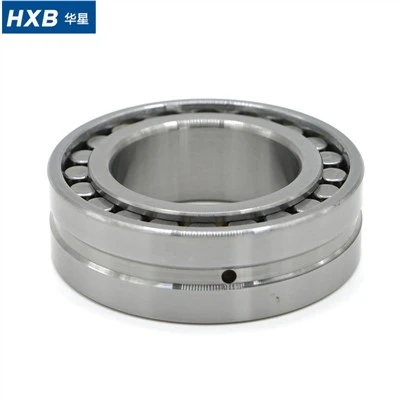
As a ball screw support bearings supplier with over a decade of working directly with OEM engineers, maintenance technicians, and equipment rebuild specialists, I’ve lost count of how many times I’ve heard, “A bearing is a bearing, right?” Wrong. A ball screw’s support bearings don’t just spin — they absorb axial and radial loads, dampen vibration, maintain rotational precision, and keep the entire linear motion system from failing prematurely. A subpar bearing won’t just hurt accuracy; it’ll cause downtime, increase production costs, and even damage the ball screw itself.
Over the years, I’ve seen customers spec bearings that looked right on paper but failed in their application, and others that swore by a certain brand only to switch when their production output jumped 20% after we recommended a different bearing type. The key difference? Knowing how to actually evaluate a ball screw support bearing’s quality, beyond surface-level part numbers or brand logos. Let’s break down what we teach every engineer who walks through our doors, tested through thousands of installations across industries from automotive stamping to semiconductor manufacturing.
Start with the Application: It’s Not One-Size-Fits-All
I can’t stress this enough: the first step in evaluating a ball screw support bearing is matching it to the exact demands of the job. Last year, a small aerospace component manufacturer contacted us with a failing bearing on their 5-axis CNC router. They’d been using a standard angular contact bearing that worked fine on their old machine, but on their new high-speed router, it seized up after 800 hours of operation.
When we asked about their application, we learned their router ran at 12,000 RPM — 40% faster than their old machine — and carried a heavy axial load from milling titanium parts. The standard bearing they’d spec’d didn’t have the internal geometry to handle high speeds under load, leading to excessive heat and premature wear. We recommended a high-speed angular contact bearing with optimized raceway curvature, and their uptime went from 60% to 98%.
That’s why the first evaluation criteria is application matching: axial load, radial load, rotational speed, operating temperature, and environmental conditions (like dust, moisture, or corrosive chemicals). A bearing rated for 5,000 RPM and 500 lbf axial load will fail in an application requiring 10,000 RPM and 1,000 lbf axial load — no matter how expensive it is. Always pull the application specs before even looking at the bearing.
Precision Grade: The Numbers That Matter Most
Once a bearing fits the application profile, the next step is precision grade. Most customers know to look for ABEC or ISO grades, but few understand what those numbers actually mean. ABEC (Annular Bearings Engineering Committee) grades range from ABEC 1 (lowest) to ABEC 9 (highest), while ISO grades like ISO 10 and ISO 5 follow similar precision standards.
Let’s clarify: ABEC 1 is for general-purpose applications like a garage 3D printer. ABEC 7 is the minimum we recommend for CNC machines, medical equipment, or any system requiring sub-0.001 inch linear accuracy. But here’s the catch — a lot of “ABEC 7” bearings sold online are just graded to meet the minimum ABEC standard, not the full precision required for a ball screw. True high-precision ball screw support bearings have tighter tolerances for internal clearance, raceway runout, and ball size consistency.
Last year, a medical device OEM reached out to us because their syringe-filling line was producing 15% defective doses due to linear motion inaccuracy. They’d bought a batch of “ABEC 7” bearings from a discount supplier, but when we tested them in our lab, we found their radial runout was three times the ABEC 7 limit. The balls were mismatched in size by over 0.0002 inches, causing uneven rotation that translated directly into linear error in the ball screw. True precision grade bearings don’t just meet tolerance limits — they’re held to consistent, low deviation across every unit in a batch. That’s critical for applications where even a 0.0005 inch error can ruin a part or a medical component.
Material Quality: The Backbone of Longevity
Bearing quality stands or falls on its materials, and there are four key components to evaluate: the inner ring, outer ring, balls, and cage.
Most bearings use chrome steel (like 52100 grade), but not all chrome steel is the same. For high-load, high-speed applications, we recommend premium chrome steel with a Rockwell hardness of 60–64 HRC. Any bearing with a hardness below 60 HRC will wear quickly under load, especially if it’s running at high speeds. I’ve seen cheap bearings with hardness as low as 55 HRC — they might spin fine for a few weeks, but within months, the raceways develop pitting from repeated load cycles, leading to play in the ball screw.
For high-temperature applications (like glass manufacturing lines where operating temps hit 300°F+), standard chrome steel isn’t enough. We use vacuum-degassed tool steel (like M50 grade) for these, which retains hardness at high temps and resists thermal expansion. A tool steel bearing will cost 20–30% more upfront, but it’ll last 5–10 times longer than a chrome steel bearing in those conditions, avoiding costly downtime.
The balls are another key part. Bearings with solid ceramic balls (silicon nitride) outperform steel balls in speed and corrosion resistance, but they’re not for every application. Ceramic balls are lighter, so they reduce centrifugal force at high RPM, which cuts heat and wear. But they’re also more brittle — if your application has extreme impact loads (like forging presses), a ceramic ball might crack. Steel balls are tougher for heavy impact, but ceramic is better for precision and high speed.
Finally, the cage (the part that holds the balls in place) is often overlooked, but it can make or break a bearing’s performance. Cheap bearings use stamped steel cages that can flex or break under high speed, leading to balls rubbing together, generating heat, and causing failure. We use either machined brass cages or molded polyimide cages for our high-precision bearings. Brass cages are durable, can handle high temps and loads, and maintain consistent ball spacing. Polyimide cages are lighter, quieter, and better for high-speed, low-noise applications like semiconductor manufacturing.
Internal Clearance and Preload: The Fine-Tuning Detail
Internal clearance is the tiny gap between the balls and the raceways when the bearing is assembled, and it’s one of the most misunderstood factors in bearing evaluation. If clearance is too high, the bearing will have play — that means the ball screw will have backlash, hurting accuracy. If clearance is too low, the bearing won’t have room to expand under heat, leading to preload that’s too high, causing increased friction, heat, and premature wear.
Proper internal clearance is application-specific. For most CNC applications, we recommend C3 clearance, which is slightly larger than standard, to account for thermal expansion during operation. For high-speed applications, we might go with C4 clearance, while for heavy-load applications, C2 clearance (smaller than standard) helps reduce play.
Preload is related, and it’s especially important for ball screw support bearings. Preload is the intentional compression applied to the bearing to eliminate play and increase rigidity. A correctly preloaded bearing will give a ball screw zero backlash, critical for contour milling or any application requiring tight dimensional control. A bearing that’s not preloaded enough will have play, while over-preloading will cause excess heat and wear.
I’ve seen engineers skip proper preload adjustment, leading to a system that’s either too flexible or seizes up after a few weeks. That’s why when evaluating a bearing, you need to look at its preload options — good ball screw support bearings are designed for adjustable preload, either via shims, nuts, or spring-loaded assemblies, so you can fine-tune it to your exact application.
Load Capacity and Fatigue Life: The Real-World Test
Spec sheets will list basic dynamic load rating (Cr) and static load rating (Cor), but most customers don’t know how to use these numbers. The dynamic load rating is the constant load a bearing can carry for 1 million revolutions with 90% reliability. But real-world applications have varying loads, shock loads, and thousands of hours of operation, so you can’t just take the Cr number at face value.
For example, if a bearing has a Cr of 10,000 lbf, that doesn’t mean it will last forever at 10,000 lbf. To calculate actual fatigue life, you use the Lundberg-Palmgren formula, which accounts for load, speed, and application factors. A good bearing manufacturer (like ours) will provide a fatigue life calculation tool to help you estimate how long the bearing will last in your specific setup.
What I tell customers is this: don’t go with the lowest load rating that barely meets your specs. Add a 20–30% safety factor. If your application has a maximum axial load of 5,000 lbf, spec a bearing with a Cr of at least 6,000–6,500 lbf. We’ve had customers who tried to save a few dollars by going with a lower load rating, only to replace bearings every 6 months. The extra cost for a higher load bearing is negligible compared to the downtime and replacement labor.
Another thing to consider is shock load capacity. If your machine is subject to sudden load changes (like a press that slams into a workpiece), the bearing needs to have good shock resistance. Bearings with a higher static load rating (Cor) will handle shock loads better, because Cor is the maximum static load a bearing can carry without permanent deformation. For shock-heavy applications, we recommend looking at both Cr and Cor — if Cor is at least 70% of Cr, that’s a good sign of shock resistance.
Noise and Vibration: The Quiet Performance Metric
For applications like medical equipment, packaging lines, or labs, noise and vibration are critical. Excessive noise isn’t just annoying — it’s a sign of poor bearing quality. A well-made ball screw support bearing will run quietly, with consistent low vibration. Cheap bearings with mismatched balls or rough raceways will produce high-frequency noise and vibration, which can lead to wear in other parts of the system, and even cause errors in precision applications.
We test every bearing we ship for noise and vibration in our acoustic lab, using precision sensors that measure vibration at different speeds. If a bearing has a noise level above 60 dB at 10,000 RPM, it doesn’t leave our facility. I once had a customer in the pharmaceutical industry who rejected a batch of bearings from another supplier because their line’s noise levels exceeded OSHA limits, and the bearings were transferring vibration to the syringe pumps, leading to inaccurate doses. Swapping to our low-noise bearings fixed both issues.
Putting It All Together: What to Look for in a Quality Supplier
At the end of the day, evaluating a ball screw support bearing isn’t just about checking numbers on a spec sheet — it’s about working with a supplier that understands your application, stands behind their products, and provides full transparency. Over the years, we’ve built our reputation by not just selling bearings, but helping customers select the right one. We walk through their application specs, test bearing performance in our lab if needed, and provide support long after installation.
If you’re working on a new linear motion system or troubleshooting a failing ball screw, don’t settle for a bearing that “fits.” Take the time to evaluate its precision grade, material quality, internal clearance, load capacity, and noise characteristics. And if you’re unsure, reach out to a supplier that’s willing to work with you to find the right solution — not just push the cheapest option.
At the end of the day, the ball screw support bearing is a small part, but it’s what keeps your system moving accurately and reliably. A quality bearing will last years, avoid costly downtime, and make your entire machine perform better. A cheap bearing will cost you more in the long run.
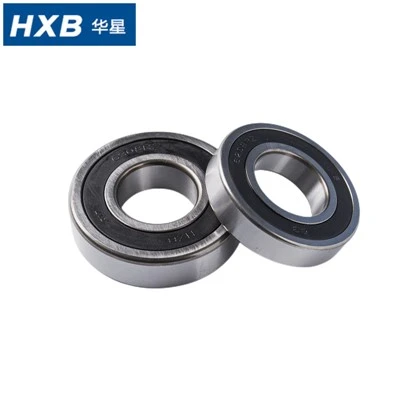
If you’re ready to learn more about selecting the right ball screw support bearings for your application, or need help troubleshooting a current setup, reach out to our team to connect for a detailed consultation. We’re here to help you get the performance and reliability you need.
References
Servo Motor Bearings Boring, T. (2020). Precision Linear Motion: Bearings, Screws, and Systems. Industrial Press.
Harris, T. A., & Kotzalas, M. N. (2007). Rolling Bearing Analysis (5th ed.). Wiley.
ISO 10328:2016. Rolling Bearings – Precision Bearings – Boundary Dimensions and Tolerances. International Organization for Standardization.
Hangzhou Huaxing Kechuang Holding Group Co., Ltd.
Hangzhou Huaxing Kechuang Holding Group Co., Ltd. is one of the leading manufacturers and suppliers of ball screw support bearings in China, featured by quality products and good service. Please rest assured to buy bulk durable ball screw support bearings from our factory. Welcome to view our website for more information.
Address: No.553 Yingbin Road, Linping, Hangzhou, 311100, China
E-mail: wmb@huaxingbearing.com
WebSite: https://www.hxbbearing.com/
