As a PU Primer supplier, I get asked this question more than any other: how does our product react to UV rays? It’s not just a technical detail—for our customers, it’s make-or-break for projects ranging from automotive refinishing to wood furniture, industrial coatings to marine applications. I’ve spent years on the phone with contractors, finishers, and even DIYers who’ve had their work fail prematurely, and most of the time, the culprit was either a misunderstanding of how PU primer and UV rays interact, or using a product that wasn’t formulated to handle that exposure. Let’s break this down, straight from the lab and the jobsite, no overly jargon-heavy fluff. PU Primer
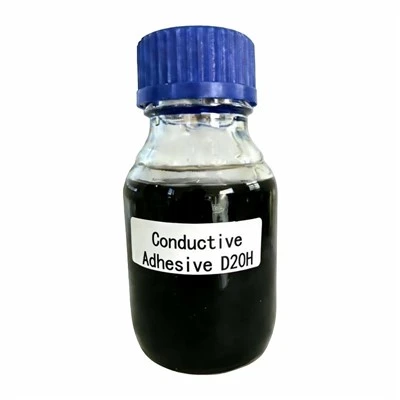
First, let’s start with the basics: what is PU primer, anyway? PU stands for polyurethane, right? But primer isn’t the topcoat you see. It’s the base layer that bonds to the substrate—whether that’s metal, wood, plastic, or concrete—creates a uniform surface, and helps the topcoat adhere better. Our primer is a two-part (2K) polyurethane system, which means it mixes a resin and an isocyanate hardener right before application. That reaction is what makes it cure hard, durable, and flexible. But here’s the thing: even a fully cured PU primer isn’t a single, inert material. It’s a polymer network with weak points, and UV rays love to target those weak points.
Now, UV rays—we’re talking about UVA (320-400 nm) and UVB (280-320 nm), the ones that come from the sun or artificial sources like UV curing lamps. UVA is the more abundant one, especially in indirect sunlight, and it’s actually the main culprit for what’s called “photodegradation” of polymers. UVB is higher energy, more harmful, but it’s mostly blocked by the ozone layer—until, of course, you get into high-altitude areas or near the equator, where UVB levels are way higher. Either way, when those rays hit a cured PU primer, they don’t just bounce off; they get absorbed by certain groups in the polymer chain.
Let me get specific here, because this is where most suppliers gloss over the details. Cured polyurethane is made up of urethane linkages—those are the -NH-COO- groups that form when the resin and hardener react. In a perfect world, those linkages are stable, but in the real world, every polymer chain has what scientists call “weak links”: places where the bonds are less tightly formed, or where residual monomers or additives are left over from manufacturing. When a UV photon hits one of those weak urethane bonds, it has enough energy to break it—this is called “bond scission.” What happens next is a chain reaction. Each broken bond creates a new, reactive molecule (a free radical) that goes on to break more bonds in adjacent chains, and also reacts with oxygen in the air. That’s why you often see polyurethane coatings turn yellow, chalky, or crack after sun exposure—it’s that chain reaction playing out.
Wait, but not all PU primer is the same. I’ve seen so many customers buy a cheap, one-part (1K) PU primer from a big box store and wonder why it falls apart in a year, while our 2K primer lasts 10+ years outdoors. The difference is in the formulation. Cheap 1K primers are often made with lower-quality resins, fewer stabilizers, and more residual unreacted isocyanates, which are extra reactive with UV. Our premium 2K formula uses a high-molecular-weight aliphatic polyurethane resin—meaning the polymer chains are longer and more stable, and the urethane linkages are less prone to bond scission. We also add UV stabilizers and antioxidants, which act like a shield: they absorb UV photons before they can hit the polymer chains, or neutralize those free radicals right after they form, stopping the chain reaction in its tracks.
But here’s the part that surprises a lot of people: UV reaction isn’t just a problem for outdoor coatings. Even indoor projects can have UV issues. If a furniture piece is near a big window with unfiltered sun, or a floor that gets a lot of exposure to artificial UV light (like from certain fluorescent bulbs, or LED grow lights for indoor gardens), that PU primer will still react. I had a customer last year who did a commercial retail display in a store with huge skylights; he used a standard 1K PU primer, and within six months, the base of the display (which got direct sun through the glass) started to yellow, and the topcoat peeled off. We switched him to our UV-stabilized 2K primer, and he just emailed me last month saying it’s still flawless two years later. That’s not luck—that’s understanding the reaction.
Let’s talk about what the reaction looks like in real time, because it’s not just a sudden failure. It’s a process. First, you’ll notice a slight yellowing—this happens within a few weeks to a few months of UV exposure. That’s the urethane linkages breaking down and forming chromophores, which are the molecules that absorb light and create color. It’s a subtle change at first, but it accelerates. Next, the surface starts to chalk: tiny particles of the degraded polymer break off, so if you wipe the surface with a cloth, you’ll see a white residue. That’s when the structural integrity starts to go. After that, cracks, delamination, or even total failure—especially if the primer was already thin, or applied over a poorly prepared substrate.
Wait, but what about topcoats? If you put a UV-resistant topcoat over your PU primer, does that mean the primer is safe? Not exactly. The topcoat will absorb most of the UV rays, but no topcoat is 100% effective. Some UV still penetrates, especially if the topcoat gets scratched or wears over time. Also, if the primer itself has no stabilizers, even the small amount of UV that gets through will eventually break it down, leading to the topcoat peeling off from the now-degraded primer. That’s why as a supplier, we always recommend that our primers include built-in UV protection—don’t rely solely on the topcoat. It’s a mistake I see all the time.
Another common misconception: all PU is the same. There’s aromatic PU and aliphatic PU. Aromatic PU uses a isocyanate hardener made with benzene rings, which is super cheap, but those benzene rings absorb UV light very easily. That’s why aromatic PU primers yellow so much faster, even with stabilizers. Aliphatic PU uses non-aromatic isocyanates, which are more stable when exposed to UV. That’s why our premium products are aliphatic—it’s a costlier formulation, but it’s the difference between a primer that holds up and one that doesn’t. We once had a customer who tried to save 20% by buying an aromatic PU primer for a marine deck project; it lasted 18 months before needing a full refinish. He switched to our aliphatic UV-stabilized primer three years ago, and it’s still performing perfectly through harsh saltwater and sun exposure.
Now, let’s get into the science a bit more, for anyone who wants to dig deeper. Photodegradation of polyurethane is a well-studied process, but it’s not just the urethane bonds at play. There are also “weak points” from the manufacturing process: when you mix the resin and hardener, if the mix ratio is off (too much hardener, or too little), you get unreacted monomers or crosslink defects, which are extra vulnerable to UV. That’s why as a supplier, we provide precise mixing instructions, and our products have a 1:1 mix ratio that’s easy to get right. No guesswork means fewer weak links, so less UV reaction.
Also, temperature and humidity play a role. If a primer is applied in extreme cold, the cure is incomplete, so there are more unreacted groups left. If it’s applied in high humidity, moisture can react with the isocyanate hardener, creating urea linkages, which are also vulnerable to UV. That’s why we recommend applying our primer in 50-80°F (10-27°C) and 30-70% humidity—for best cure, and for the most stable finished product that can handle UV exposure.
So, what can you do if you have a project that will be exposed to UV? First, match your primer to the environment. For outdoor projects (decks, fences, marine equipment), use a premium aliphatic UV-stabilized PU primer, not a cheap 1K or aromatic product. For indoor projects near windows, do the same—even if it’s not “exposed to sun,” the UV through glass is enough. For projects in high-altitude or tropical areas, add an extra UV topcoat on top of the primer, just to be safe. And always follow the mixing and application instructions—even the best primer will fail if applied wrong.
I get it, as a supplier, my job isn’t just to sell a product—it’s to make sure it works for your project. Too many companies treat primers like a commodity, but it’s the foundation of every finish. When you understand how PU primer reacts to UV, you can avoid the common mistakes that lead to premature failure, save money on rework, and get a finish that lasts. If you’re working on a project that will see UV exposure—whether it’s automotive, industrial, wood, marine, or anything else—let’s talk. We can help you pick the right primer for your needs, answer any technical questions, and make sure your finish stands up to whatever the sun (or any UV source) throws at it. Don’t guess with your project; work with someone who knows how PU primer and UV rays interact, from lab to jobsite.
PU Primer References:
- Lampman, S. R. (2002). Photodegradation and Stabilization of Polyurethanes. Journal of Coatings Technology, 74(916), 45-52.
- Delzenne, A. (1989). Weathering of Polyurethane Coatings. Progress in Organic Coatings, 17(2), 107-128.
- ASM International. (2011). Polymer Durability: Degradation, Stabilization, and Lifetime Prediction. Materials Park, OH: ASM International.
- Clough, R. L., & Shirai, M. (1998). Radiation Effects on Polymeric Materials. Nuclear Instruments and Methods in Physics Research Section B: Beam Interactions with Materials and Atoms, 151(1-4), 1-15.
Guangdong Yrbest High Polymer Technology Co., Ltd.
Guangdong Yrbest High Polymer Technology Co., Ltd. is one of the most professional pu primer manufacturers and suppliers in China, featured by quality products and good price. Please rest assured to buy bulk advanced pu primer from our factory. Contact us for quotation and free sample.
Address: Room 1701, No. 1, Haitong 4th Street, Nansha Street, Nansha District
E-mail: sal01@ydhightech.com
WebSite: https://www.ydhightech.com/
