Hey everyone, if you’ve ever spent time around a farm, you know tractors are the workhorses that keep everything running—from plowing fields to hauling hay bales to powering farm equipment. But let’s be real: for all they do, farm tractors can be pretty dangerous if you don’t know how to use them safely. As a farm tractor supplier, I get questions all the time from new farmers, small homestead owners, even folks who’ve been around tractors their whole lives about what safety features actually matter, which ones are worth the extra cost, and which ones are just marketing fluff. So I figured I’d break down the key safety features we build into every tractor we sell, plus a few that you should make sure your rig has no matter where you’re buying it. Farm Tractor
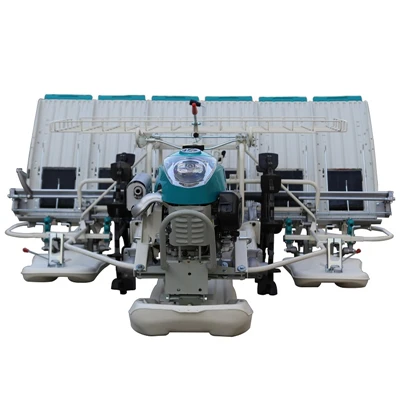
First, let’s start with the big one that’s saved thousands of lives: ROPS, or Roll-Over Protective Structure. I know, I know, ROPS sounds like another tech term, but it’s basically a steel frame that surrounds the operator’s seat to keep the tractor from crushing them if it flips. Back in the day, before ROPS was standard, a lot of farmers died from tractor rollovers—way more than from any other farm accident, actually. OSHA made ROPS mandatory for new tractors over 20 horsepower back in the 70s, but you’d be shocked how many older tractors out there don’t have it, or have beat-up, rusted ROPS that wouldn’t hold up in a flip. At our shop, every single new tractor we install has a heavy-duty ROPS, and we even retro-fit ROPS kits for older tractors if customers want to upgrade. Pro tip: don’t skip this. Even if you’re just mowing a small hillside, one wrong turn on soft dirt and that tractor can tip faster than you can react. And yeah, some people say “I’m careful, I don’t need it,” but I’ve seen too many good farmers get hurt because of one split second mistake.
Next up: seat belts. Wait, I know what you’re thinking—“A seat belt on a farm tractor? That’s weird.” But here’s the thing: ROPS only works if you’re inside that frame. If you get thrown out during a rollover, the ROPS does nothing for you. Seat belts keep you secured to the seat so you stay inside the protective structure. A lot of older tractors didn’t come with seat belts, and even some budget models skimp on them, but at our company, every tractor we ship has a high-tension seat belt that’s tested to hold up to 5 times the operator’s weight. We also add a seat belt alarm that beeps nonstop until you buckle up—because let’s be honest, when you’re in a hurry to get work done, it’s easy to skip that step. I once had a customer tell me he hated the alarm at first, until his tractor slipped on wet grass and rolled into a ditch. He said the seat belt kept him from being thrown out, and the ROPS held. He didn’t have a scratch, and he swears that alarm is the best thing on the tractor.
Then there’s the death grip clutch or hydrostatic transmission safety? Wait, no—let’s talk about the dead-man switch, also called a safety cutoff switch. This is the thing that stops the tractor dead if you get up out of the operator’s seat without putting the transmission in neutral or engaging the parking brake. So if you’re halfway through unloading hay, and you jump down to move a gate, the tractor won’t lurch forward and run over you. A lot of smaller, budget tractors have cheap dead-man switches that get worn out fast, so when we build tractors for customers, we use heavy-duty ones that are spring-loaded and last for thousands of hours of use. I’ve seen way too many accidents where a kid hopped on a tractor, stood up, and the tractor kept moving because the switch was broken. That’s 100% preventable with a good dead-man switch.
Now, for the folks who do a lot of work with attached equipment—like plows, balers, or loaders—you need to make sure your tractor has the right hookup safety features. First, there’s the PTO, or Power Take-Off, guard. The PTO is that spinning shaft on the back of the tractor that powers all your equipment. If you get your clothes, hair, or a glove caught in that, it can pull you in faster than you can scream. Most new tractors have a spring-loaded guard that covers the PTO when it’s not hooked up, but a lot of farmers take those guards off because they “get in the way.” Don’t do that. That guard is there for a reason. Also, we install secondary safety pins for the three-point hitch, which is what holds your plow or loader. If the pins come loose, your equipment can fall off unexpectedly, which is a hazard if you’re driving down the road or working in the field. We use zinc-plated safety pins that are hard to lose, so you don’t have to worry about them falling out mid-job.
Wait, what about visibility? That’s a safety feature people don’t always think about, but it’s huge. If you can’t see what’s around you, you’re way more likely to hit something or get run over. Modern tractors have better visibility than old ones—wider windshields, slimmer ROPS frames so you can see out the sides, and sometimes rearview cameras for when you’re hooking up equipment or backing up. We also add side mirrors that are adjustable, so you can see both sides of the tractor without having to turn your head all the way. I had a customer who farms 200 acres tell me that the rearview camera on his tractor saved him from backing over his 10-year-old who was playing behind the tractor. He said he never would have seen him in the old mirror setup. That’s not a luxury, that’s a safety feature.
Also, let’s not talk about braking systems. Old tractors often had separate brakes for each rear wheel, which works for tight turns but can be dangerous if you’re not used to using them. Newer tractors have single, synchronized brakes that work like a regular car’s brakes, so you don’t have to learn two different controls. We also add a parking brake that’s strong enough to hold the tractor on a steep hill, which is a big deal if you’re parking on a slope to get something out of the back. A lot of farmers use the PTO to hold the tractor instead of the parking brake, but that’s a bad habit that can lead to accidents. A good parking brake is non-negotiable.
Now, I know some of you are thinking, “I have a small homestead, I don’t need all these fancy features.” Let’s be real—even a compact tractor (under 20 horsepower) has safety features you should look for. For small tractors, the dead-man switch is even more important, because they’re lighter and can move faster than a big tractor. Some compact tractors also have tip-over bars, which are like smaller ROPS for smaller rigs. We make sure all our compact tractors have those, because even if you’re just mowing your yard, a small tractor can tip if you go too fast around a curve.
Wait, but what about features that are just sales hype? I get asked about things like “traction control” or “GPS-assisted steering” sometimes, and while those can help with productivity, they’re not safety features. Safety features are the ones that prevent injury if something goes wrong, not the ones that make your job easier. That’s a key difference. So when you’re shopping for a tractor, make sure you’re not paying extra for a feature that doesn’t actually keep you safe.
Let me also mention something that’s often overlooked: operator training. I sell tractors for a living, but I always tell new buyers to take a training course, even if they’ve used tractors before. Tractors are different every year, and new models have new controls. We even offer free basic safety training for all our customers, because I’d rather spend a few hours teaching someone how to use their tractor safely than answer a call about an accident. At the end of the day, the best safety feature is a knowledgeable operator.
Now, if you’re in the market for a new tractor, or you’re thinking about upgrading your old one, don’t cut corners on safety. A good tractor isn’t just about horsepower and how much it can haul—it’s about keeping you safe while you do the work you love. Every tractor we build is designed with real farmers in mind, not just marketing teams. We test every safety feature on our rigs before they leave the shop, because we know how important they are.
If you’re ready to talk about what tractor works for your farm, or you want more details on the safety features we offer, reach out to our team to set up a time to chat. Whether you’re a first-time farmer with a small homestead or a large operation needing a fleet of tractors, we can help you find the right rig with the safety features you need. Don’t wait until an accident happens—invest in safety now, so you can keep working your land for years to come.
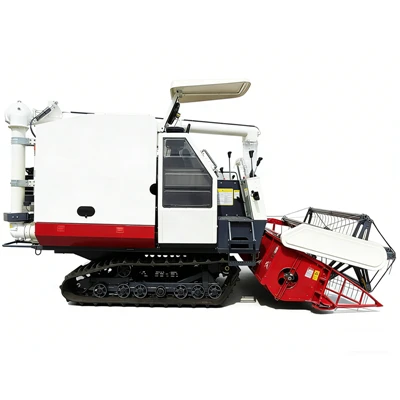
Rice Combine Harvester References:
- Occupational Safety and Health Administration. (2022). Agricultural Tractor Safety. U.S. Department of Labor.
- National Agricultural Safety Database. (2021). Tractor Rollover Protective Structures (ROPS) Fact Sheet. University of Florida Institute of Food and Agricultural Sciences.
- Centers for Disease Control and Prevention. (2020). Farm Safety: Tractor-related Injuries and Deaths. CDC National Institute for Occupational Safety and Health.
- American Society of Agricultural and Biological Engineers. (2019). Safety Standards for Agricultural Tractors and Equipment. ASABE Standards.
Huzhou Liangyi Agro Machinery Co., Ltd.
As one of the most professional farm tractor manufacturers and suppliers in China, we have world-leading production equipment and strong manufacturing capabilities. Please rest assured to wholesale advanced farm tractor from our factory. Contact us for more cheap products.
Address: High-Tech Industrial Zone, Huzhou City, Zhejiang Province, China
E-mail: Liangyi_agro@126.Com
WebSite: https://www.cnliangyi-agro.com/
