Alright, let’s cut to the chase—when someone asks “What’s the process of automating traffic lights?” half the time they’re thinking of those frustratingly timed lights that make you wait 5 minutes for a 2-second green, and the other half is wondering how city planners actually pull off that chaotic dance of cars, bikes, and pedestrians. As a traffic lights supplier, I’ve spent the last 8 years working hand-in-hand with municipalities, tech teams, and even random traffic cops who’ll flag me down mid-coffee to say, “Hey, your lights just saved my shift.” So I’m not here to throw a bunch of jargon at you—let’s break this down like we’re troubleshooting a busy 5 o’clock rush hour. Traffic Lights
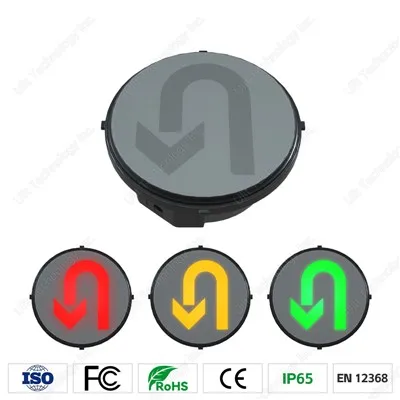
First off, let’s get one thing straight: automating traffic lights isn’t just swapping out old bulbs for fancy ones. It’s a whole system that learns, adapts, and doesn’t treat every road like a one-size-fits-all scenario. A lot of people think it’s plug-and-play, but nah—you gotta do the legwork first. Step one? Site assessment, and I’m talking deep dive, not a quick drive-by. Last month, we worked with a small town outside Chicago that thought their main street intersection just needed new lights, but when we rolled up with our team, we noticed two big things: 1) the morning rush was all commuters going north, and evening was all south, so fixed timing was night and day wrong, and 2) there was a elementary school nearby that had zero pedestrian detection, leading to parents jaywalking because the light cycle didn’t account for kid crosswalks. We didn’t just show up with boxes of lights—we counted cars for 3 days, tagged bike volumes, even waited with the crossing guard to see how many little ones rushed to school. That’s non-negotiable. You can’t automate a light that doesn’t know what’s happening in real time, right?
Next, you pick the tech stack, and this is where things get interesting. I’ve seen so many suppliers cut corners here, and it blows up in their face. Let’s start with the sensors—there’s no way around ’em. Old-school loops in the road? Those are fine for basic stuff, but if you have a bike lane, they don’t pick up bikes half the time, so a cyclist will sit at a red light forever and get pissed. Now, we use a mix of loop sensors, video analytics, and even radar for tricky spots. Video is great because it can count cars, track cyclists, and even spot pedestrians waiting at crosswalks, but you gotta calibrate it so it doesn’t confuse a bunch of parked cars for a queue. Radar is better for bad weather—snow, rain, fog—because cameras get blurry, but radar just keeps pinging, no sweat. For that Chicago school intersection, we added video sensors on crosswalk poles that can spot a kid waiting even if there’s a big SUV blocking the line of sight. Small change, huge difference.
Then comes the brain of the operation: the traffic signal controller. This is the box that lives in a cabinet at the intersection, like the conductor of a tiny, very stress-inducing orchestra. A lot of old controllers are pre-programmed with fixed timing, but modern automated ones are adaptive—they use an algorithm that adjusts in real time. Wait, not just any algorithm—we test ours against actual traffic data, not just lab stuff. For example, if the algorithm sees that from 7:15 to 7:45 AM, northbound traffic is always 3x heavier than southbound, it’ll extend green time for north, but if a fire truck blares its siren, the controller gets a signal from the city’s central system and jumps to red for all directions except the fire truck’s path. Last year, we worked with a city that had a big parade route, and the controller was able to sync with the parade’s GPS to hold greens along the route so marchers didn’t have to stop. No more angry parade-goers honking at red lights mid-step.
Wait, hold on—you can’t just install the controller and turn it on, right? That’d be like buying a new gaming console and plugging it in without updating the software. We do a test phase, and it’s way more involved than it sounds. First, we set the controller to “offline test” mode, where it uses the historical traffic data we collected to run through a week of simulations. We’ll tweak the timing parameters—like minimum green time for pedestrians, maximum green time so no one direction hoggs the light, gap time between changes to keep people from racing yellow. Then, we go live but with a “training wheels” mode for the first 2 weeks. That means a city traffic engineer can log into the system from their laptop, watch in real time, and manually adjust if the algorithm messes up. Early on, when we did a project in Phoenix, the algorithm kept giving too much green time to the east side because it was built on data from a weekday, but weekends had way more westbound traffic. The engineer caught that in the first week, tweaked the algorithm, and boom—no more Saturday traffic jams on main street. I tell my team all the time: the algorithm is only as good as the data you feed it, and the test phase is where you fix the weird, unpredictable stuff that lab tests never catch.
Now, integration with the city’s central traffic management system. This is the part that makes automated lights not just work alone, but work together. If you have a strip of 5 intersections on a main road, syncing their lights means you can get a “green wave” where you hit every green if you drive the speed limit. But here’s the cool part: it’s not just syncing fixed speeds. Modern systems can talk to connected cars too—like, if your car has a traffic light communication feature, it can tell you how fast to go to hit the next green, or when the light’s about to change so you don’t gun it. That stuff is still rolling out, but we’ve done pilot programs with a few cities, and the feedback has been wild—people say they’re cutting their commute time by 10-15% just from that. But integration means making sure all the parts talk to each other without glitches. We had a project in Dallas a few years ago where a bad firmware update made 12 intersections go red at the same time during rush hour—total gridlock. Learned our lesson: we test every integration update on a single intersection first, never all at once, and we have a remote override for the city so they can flip back to manual if something breaks.
Wait, what about edge cases? Because automated lights aren’t perfect, and I’ve seen some wild ones. Like, what if a delivery truck is double-parked blocking a sensor? Or a protest blocks the intersection? Or a deer walks across the road at 2 AM? That’s why we built in manual overrides, but also, our controllers have fail-safes. If the sensors stop working for some reason, they default to the pre-programmed timing that’s based on historical data, so you don’t have intersections going all red or all green. For those weird edge cases, we also offer on-site training for the city’s traffic staff—they need to know how to use the system, override it when needed, and tweak settings if an event (like a marathon or a festival) messes with regular traffic. Last summer, we trained a team in Denver for the marathon route, and they were able to manually adjust the lights to keep runners moving, and even add temporary crosswalks for spectators without needing to send a technician to every intersection. That’s the stuff that makes clients come back—they don’t just buy a product, they get support when they need it.
Oh, and don’t sleep on maintenance! I know, maintenance sounds boring, but it’s half the battle. Automated lights aren’t set it and forget it. Weather wears out sensors, bugs get in the controllers, traffic patterns change over time (like new office parks opening, or a residential area getting built up). We offer yearly checkups for all our clients—we pull data from the controllers for the past year, look for patterns where the algorithm is struggling, replace any worn parts, and update the software. A few months back, a client in Minneapolis called us because their winter snow was messing with their radar sensors—we came out, calibrated them for snow, and that fixed the problem. If we didn’t do regular maintenance, those lights would’ve been as useless as the old timer ones that got stuck on red.
Let’s be real—automating traffic lights isn’t about making them “smart” for the sake of being cool. It’s about making streets safer, cutting down on commute time, and reducing emissions from idling cars. I’ve talked to city mayors who were skeptical at first—they thought it was too expensive, or that it’d take too long to install. But after our project, one mayor told me their city saved $200k a year in fuel costs because less idling, and they had a 30% drop in pedestrian near-misses because the crosswalk timing was actually aligned with how many people were walking. That’s the payoff.

If you’re a city planner, traffic department head, or even someone who’s just sick of waiting at lights for no reason, let’s chat. We don’t do one-size-fits-all packages—we come assess your specific intersections, work with your team to figure out what you need, and make sure the automation works for your traffic, your budget, and your schedule. No hidden fees, no jargon, just lights that actually work when you need them.
Traffic Signs References:
- Federal Highway Administration. (2022). Adaptive Traffic Control Systems: A Guide for Municipalities and Transportation Agencies. U.S. Department of Transportation.
- Institute of Transportation Engineers. (2021). Traffic Signal Automation: Best Practices for Deployment and Maintenance. ITE Press.
- National Cooperative Highway Research Program. (2020). Sensor Technologies for Modern Traffic Signal Systems. NCHRP Report 928.
Ulit Technology Inc.
As one of the most experienced traffic lights manufacturers and suppliers in China, we offer a wide range of products with superior quality. We warmly welcome you to wholesale bulk durable traffic lights from our factory. If you have any enquiry about cooperation, please feel free to email us.
Address: NO.2 Mudan Road, Nan’an District, Chongqing, China
E-mail: cqulit@sina.com
WebSite: https://www.ulitcn.com/
