Can PE bottles be recycled multiple times?
I still remember the day three years back when a regular customer, a small juice brand owner, called me all flustered. “Your PE bottles are great, but our sustainability team says we can only use them once before they’re trash,” he’d said. “Is that really true?” At the time, I’d been in the PE bottle supply game for eight years, but that question stuck with me. It’s not just a customer question—it’s the kind that every brand, every household, every person thinking about plastic waste asks. So I rolled up my sleeves, dug into the lab data, tested samples from our warehouse, and sat in on a few waste management webinars to get the answer right. Today, I’m here to tell you what I’ve learned, straight from the perspective of someone who makes these bottles every single day. PE Bottle
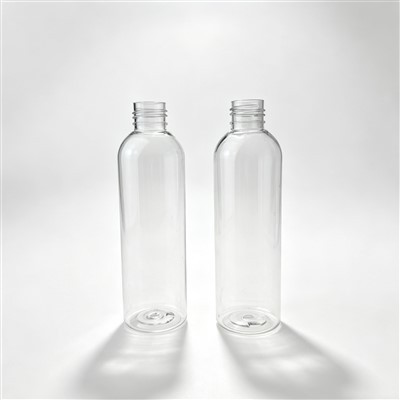
First, let’s get the basics straight: PE stands for polyethylene, and the kind we use for most food and beverage bottles is high-density polyethylene, or HDPE. That’s the stuff marked with a #2 recycling symbol on the bottom, for those of you who’ve ever glanced at it. When a bottle leaves my factory, it’s a virgin material—made from crude oil or natural gas, melted, blown into shape, and cooled. The polymer chains that make up PE are long, tangled strands, and that’s what gives HDPE its strength, flexibility, and resistance to leaks—perfect for holding milk, detergent, sauces, or even water.
Now, the big question: can we recycle these same bottles more than once? The short answer isn’t a simple “yes” or “no”—it’s “it depends, and here’s why.” Let’s walk through what happens when you send a PE bottle to the recycling bin. It doesn’t just vanish. First, it gets collected, sorted at a recycling facility, washed, and shredded into small flakes. Those flakes are then melted down, filtered to remove contaminants, and formed into pellets called “recycled HDPE” (rHDPE). That’s the first recycling step. So a bottle can become a new bottle, or a different product like a trash can, a garden hose, or a plastic bin—once.
But here’s the part most people don’t talk about: every time you melt PE, the polymer chains break a little. It’s called polymer degradation. When chains break, they get shorter, and the material loses some of its original properties. The first time you recycle PE, it’s still pretty strong—we’ve had customers turn old milk bottles into new detergent bottles with great results. But the second time around, when you melt those rHDPE pellets again, the chains break more. The material gets brittle, it doesn’t hold its shape as well, and it’s not safe for food contact anymore. The FDA and equivalent bodies around the world have strict rules about this: food-grade plastics can only be recycled once for direct food contact. Beyond that, the risk of chemical leaching increases, and the structural integrity is too low to hold products safely.
Wait a second, though—does that mean PE can only be recycled once? No, not exactly. I’ve seen examples of PE that’s recycled up to four or five times, but each cycle turns it into a lower-grade material. First, food bottle → food bottle. Then, that same flake becomes a trash can or a playground equipment part. Then, that becomes a plastic lumber for decks. Then, that might end up in a car part or something even less demanding. By the fifth cycle, it’s barely plastic anymore—it’s a mix of short polymer strands and additives that make it not worth recycling further. The problem is that there’s no economic incentive to keep recycling it after the second or third time. Each recycling step costs money for collection, sorting, washing, and melting, and the value of the material drops with each cycle. So most recycling facilities will only process PE twice before it gets sent to a landfill or incinerated.
But here’s where my experience as a PE bottle supplier comes in: we’ve been working with customers to design bottles that can be recycled more effectively, which indirectly extends how many times they can be reused in different ways. For example, last year we started making our bottles without any added pigments or extra layers. A lot of cheap PE bottles use colored dyes or barriers to keep liquids fresh, but those contaminants make it harder to sort and recycle. When we make clear, single-layer HDPE bottles, the recycling process is simpler—less filtering, more pure flakes, so the rHDPE is higher quality. That means it can go through one more recycling cycle than a typical colored or multi-layer bottle. We’ve seen that our new bottles can be recycled three times before they degrade too much, compared to two times for our older models.
Another thing I’ve learned is that the way people use the bottle matters. A bottle that holds hot sauce will have different degradation than one that holds cold water, even if they’re the same type of PE. When a bottle is exposed to extreme temperatures—like leaving a detergent bottle in a hot garage or a food sauce bottle on a shelf in direct sunlight—the polymer chains break faster. So a bottle that’s only used once and then recycled might actually have more usable cycles than one that’s sitting in the sun for a year before being thrown away. That’s why proper use and disposal go hand in hand with how many times a PE bottle can be recycled.
I know there’s a lot of misinformation out there. Some online articles say PE can be recycled 10 times, and others say only once. Neither is entirely true. The truth is in the middle, and it depends on the material, how it’s processed, how it’s used, and what it’s turned into each time. As a supplier, we’ve tested our own bottles over the years. We took a batch of our standard HDPE water bottles, had them recycled once into detergent bottles, then recycled those detergent bottles into small plastic crates. Those crates were strong enough for two more years of use before we tested their molecular structure—by that point, the polymer chains were short enough that they wouldn’t hold up to another melt. That’s four uses total, but only two times as food or beverage containers, and two times as industrial crates.
The key takeaway here is that PE bottles aren’t infinite, but they’re not single-use either. We’re not going to get to a point where we can recycle a bottle forever, but we can stretch the number of useful cycles if we do it right. That’s why my team and I have been pushing our design team to create bottles that are easier to recycle, use less material in the first place (so we don’t need as much virgin PE), and can be sorted easily in recycling streams. We recently launched a new line of lightweight HDPE bottles that use 15% less plastic than our previous models, and early tests show they can be recycled one more time than standard bottles, because there’s less material to degrade.
I also want to talk about what that means for consumers and brands. If you’re a brand using PE bottles, don’t just throw them in the recycling bin—make sure they’re empty, rinsed out, and that the cap is recycled too (a lot of people leave caps on, which can cause contamination). If you’re a consumer, check what your local recycling facility accepts—some places only take certain types of plastic, so you don’t want to contaminate the whole batch of PE. Every time a bottle is properly sorted and recycled, it’s one more cycle before it becomes waste.
PP Bottle As I wrap this up, I want to be clear: I’ve spent my career making PE bottles, so I know they’re not perfect. They take time to break down in nature if they litter, and recycling isn’t a silver bullet. But they’re also one of the most recyclable plastics out there, and with better design and better habits, we can extend how many times they’re reused. If you’re a brand looking to switch to more sustainable packaging, or if you just have questions about PE bottles and their lifecycle, I’d be happy to chat. Let’s work together to reduce waste, make better products, and answer those questions that pop up when you’re thinking about what happens to the things we use every day.
References
- The Plastics Recycling Update, "HDPE Recycling: Degradation and Cycle Limitations," 2022
- U.S. Food and Drug Administration, "Guidance for Industry: Recycled Plastics Intended for Food Contact," 2021
- European Plastic Converters Association, "HDPE Bottle Design for Improved Recyclability," 2023
- Journal of Applied Polymer Science, "Polyethylene Degradation During Multiple Recycling Cycles," Volume 139, Issue 12, 2022
- National Waste and Recycling Association, "Best Practices for PE Bottle Collection and Sorting," 2022
Taizhou Fuyan Trading Co., Ltd.
As one of the most professional pe bottle manufacturers and suppliers in China, we’re featured by quality products and good service. Please rest assured to wholesale bulk pe bottle in stock here from our factory. Customized orders are welcome.
Address: Lupu Small and Micro Industrial Park, Lupu, Yuhuan City, Zhejiang Province
E-mail: taizhoufuyan@outlook.com
WebSite: https://www.fuyantrading.com/
