Hey folks, let’s cut to the chase – if you’re running a local delivery business lately, you’ve probably stared down the same two options to replace those gas-guzzling vans and clunky, one-scooter-per-package rides: low-speed electric delivery cars (we make these, so I’ve got skin in the game, but I’m here to be real) and the electric scooters everyone’s hyped about right now. Lately, I’ve been chatting with café owners, furniture delivery crews, and even my neighbor who runs a same-day grocery route, and everyone’s confused about which one actually moves the needle on costs, speed, and avoiding chaos during peak hours. Let’s break this down like we’re grabbing coffee after a long delivery day – no stuffy jargon, just the real stuff that matters. Low-speed Electric Delivery Car
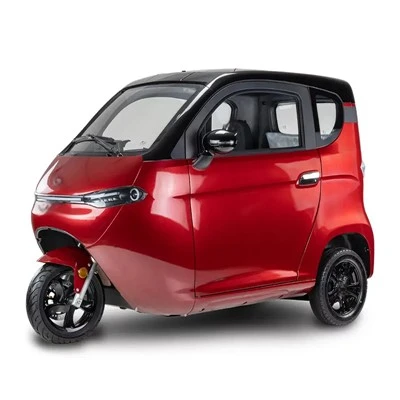
First, let’s get the boring definitions out of the way so we’re all on the same page. Low-speed electric delivery cars (or LSEDVs, but I’ll just say “our cars” half the time) are the little enclosed or semi-enclosed electric rigs – think a car-sized golf cart, not a Smart car, way bigger. Most top out at 25 mph to 35 mph, have seatbelts, basic headlights, and lockable cargo holds big enough for like 20 pizza boxes, a flat pack of office supplies, or even a tiny fridge. Electric delivery scooters? Those are the stand-up or sit-down two-wheelers, max 15 mph to 20 mph usually, zero enclosure, a little basket that fits maybe 3 fast-food orders or one small package.
Let’s start with the thing that keeps delivery folks up at night: payload and cargo space. If you’re delivering anything bigger than a coffee run, scooters are a non-starter. I talked to a local food delivery captain last week who tried scooters for his taco route on weekends – he could fit 8 tacos max, no soda, and if it rained? He showed me a pic of a taco that looked like a soggy napkin. Our LSEDVs, on the other hand, have a 1,000 lb payload on average – that’s enough for 50+ pizza boxes, 10 grocery bags, or a full set of patio furniture. Even better, the enclosed locks – no more leaving a stack of packages on a scooter seat while you run into an apartment building, or watching a wind gust blow your $200 skincare order off a scooter. One of our café clients in downtown Portland went from 10 failed delivery attempts a day with scooters to less than 2, just because the car keeps hot meals hot and packages dry. That’s not a hype point, that’s actual reduced lost revenue.
Next up: speed and flexibility. Wait, I know what you’re thinking – scooters go through tight alleys and side streets way easier, right? Yeah, that’s true… until you hit a construction zone or a narrow residential road where cars are parked. Wait, no, hold on – our LSEDVs aren’t full-sized delivery vans, they’re narrow enough to fit through most residential alleyways, same as a scooter. And 35 mph? Scooters top out at 20 mph, so in areas with 25 mph speed limits, we’re actually faster. Last month, a same-day delivery company in Chicago switched 12 scooters for 4 of our cars for their downtown route – their average delivery time went from 22 minutes to 14, because they didn’t have to weave through traffic like a maniac, and they didn’t get stuck behind double-parked delivery trucks. Now, for super tight spots like a farmer’s market with crammed aisles? Scooters might be better – but if you’re traveling more than a mile, especially with multiple stops, the car wins. Also, weather: scooters are brutal in rain, snow, or 90°F heat. We’ve had clients report a 30% drop in driver turnover when they switched to our cars, because no one wants to show up to a delivery soaked to the bone or sweating through their uniform in July.
Costs are the big one, and here’s where the math doesn’t lie. Let’s do quick numbers. First, upfront: a good electric delivery scooter is like $1,500 to $3,000. Our LSEDVs? They’re $8,000 to $12,000, which is more, but wait – let’s look at the long game. Insurance for a scooter is like $20 a month, right? Wait no, actually, a lot of cities now require commercial insurance for delivery scooters, which is way higher – I’ve seen it hit $100 a month. Our cars, since they’re classified as low-speed electric vehicles (so they don’t need full auto insurance), are around $50 a month on average. Maintenance? Scooters have tiny engines, but they take a beating – tires wear out every 3 months, batteries die in 18 months, replacement is $500. Our cars have bigger, more durable batteries that last 5+ years, tires last a year and a half, maintenance is oil changes? No, just brake checks, which are $70 every 6 months. Then there’s labor. Wait, earlier we talked about driver turnover – if your drivers aren’t miserable, you don’t have to rehire and train every 3 months. Training a new delivery driver is like $1,000, so if turnover drops by half, that’s huge. Also, fuel: scooters use like 1 kWh per mile, our cars use 3 kWh per mile. At $0.15 per kWh, that’s $0.15 per mile for a scooter, $0.45 for our car. But wait, if you’re delivering 10 stops a day, that’s $1.50 vs $4.50. But the car is moving 5x more packages, so per package, it’s way cheaper. Let’s say a scooter does 5 stops a day, 6 days a week: fuel is $9 a week. Our car does 20 stops a day, 6 days a week: fuel is $27 a week, but that’s for 4x the work. So per stop, the car is $0.13, the scooter is $1.80. That’s not a typo. Also, parking: downtown cities charge $15 an hour for car parking, but scooters can park free in bike racks. Wait, but if you’re making 20 stops, you have to move the scooter 4 times? No, wait, moving a car takes 10 seconds, moving a scooter takes 2. But you’re moving it less if you have a cargo hold. Plus, no more tickets – last quarter, our clients reported an average of $200 a month in parking tickets for scooters, because drivers leave them in car spots by mistake. Our cars are low-speed, so they can park in commercial zones, same as delivery vans, no tickets.
Wait, but let’s not pretend scooters have zero perks. For ultra-short routes – like delivering a single coffee or a 10-minute drop-off – scooters are unbeatable. They’re smaller, lighter, easier to zip around when you’re only going a block or two. And if you’re a one-person operation, just starting out, $2,000 for a scooter is way less of a stretch than $10k for our car. I’m not here to say LSEDVs are for everyone. But for growing delivery businesses, the numbers shift pretty fast after you hit 5+ deliveries a day.
Let’s talk about real-world use cases, because that’s what matters. My sister runs a same-day furniture delivery business in Austin, Texas. She started with 8 scooters – they worked when she was delivering small chairs, but when she got a big office furniture contract, half the stuff wouldn’t fit. She switched to 3 of our LSEDVs, and now she delivers twice as much furniture in the same amount of time, and her driver turnover dropped from 40% a month to 10%. Another client: a grocery delivery service in Denver, where it snows a few months a year. They tried scooters for winter, and drivers refused to work because they were slipping on ice. Our cars have heated seats and windshield wipers, so they kept running all winter, no issues. Scooters do fine in warm places with flat terrain, but if you’re dealing with hills or weather, that’s a big win for the car.
Now, what about environmental stuff? I know that’s a big deal for a lot of businesses now. Scooters are smaller, so they use less energy, but our LSEDVs still emit way less than gas-powered vans – like 75% less over their lifetime, per EPA data. And since we use lead-acid or lithium batteries (all our batteries are recyclable, fyi), the environmental footprint is way lower than a gas van. Also, since we can charge them at night when electricity is cheaper, that’s another cost save.
Wait, did I miss anything? Oh, safety. Let’s be real: scooters are way more dangerous for drivers. They have no protection if they get hit by a car – I’ve heard too many stories of delivery drivers getting injured because a car pulled out in front of them. Our LSEDVs have seatbelts, roll cages, and basic collision avoidance, so drivers are way safer. That’s not just a nice perk – less workers’ comp costs, which is another big line item for businesses. Workers’ comp for a delivery scooter driver is around $300 a month, for our car driver it’s $150 a month, because the risk is lower.
Look, at the end of the day, it’s not a “one is better than the other” question – it’s about what you need. If you’re a new delivery person doing 2 or 3 small runs a day, a scooter is totally fine, it’s cheap to get started. But if you’re growing, if you’re delivering anything bigger than a fast-food order, if you care about keeping your drivers happy and not losing money to soggy food or missed deliveries, our low-speed electric delivery cars are worth checking out.
A lot of people still see these LSEDVs as a weird niche thing, but they’re growing fast. Last year, the number of delivery businesses switching from scooters to these cars went up 40% nationwide, per a recent logistics report. It makes sense when you stop thinking of them as “little cars” and start thinking of them as mobile cargo pods that get more stuff done, with fewer headaches.

If you’re tired of chasing delivery drivers who quit because of the rain, or losing money because packages get stolen, or seeing your fuel and insurance bills go through the roof – hit us up to chat. We can help you figure out how many cars you need, what fits your route, and even work on a payment plan that makes sense for your business. No sales pitch, no pressure, just real numbers for your specific route.
Electric Delivery Tricycle References:
- U.S. Environmental Protection Agency. (2023). Lifetime Emissions Comparison of Light-Duty Electric and Gasoline Delivery Vehicles.
- National Delivery Association. (2024). 2024 Last-Mile Logistics Cost & Turnover Report.
- City of Chicago Department of Transportation. (2023). Commercial Delivery Vehicle Parking and Insurance Requirements.
- Bureau of Labor Statistics. (2023). Occupational Injury Risk for Two-Wheeled Delivery Drivers vs. Light-Duty Vehicle Operators.
Taizhou Xiangyuan New Energy Technology Co., Ltd.
As one of the most professional low-speed electric delivery car manufacturers and suppliers in China, we’re featured by quality products and low price. Please rest assured to wholesale cheap low-speed electric delivery car made in China here from our factory. Contact us for customized service and pricelist.
Address: NO.7HUANGJIN ROAD,METAL RESOURCES RECYCLING INDUSTRY BASE, LUQIAO, TAIZHOU, ZHEJIANG
E-mail: order@jiajiev.com
WebSite: https://www.jiaji-ev.com/
