Hey guys, let’s cut to the chase—if you’ve spent five minutes in a modern car lately, you’ve probably sighed at those scratchy shoulder seatbelts that dig into your neck on a 20-minute drive. Or maybe you’ve adjusted the buckle a dozen times because it’s either pinching your ribs or slipping off your hip like a bad accessory. For years, seatbelts were seen as just a safety chore, the thing you yank and click without thinking, right? But here’s the tea—this old-school take is so out of date. I’m from a car seatbelt supply company (no fancy corporate jargon, promise), and over the last decade, we’ve watched comfort features go from “nice-to-have” to “non-negotiable” for both carmakers and regular drivers. Let’s break down what’s actually out there, why it matters, and no—no, they’re not just for the luxury Tesla or BMW on the highway. Car Seatbelt
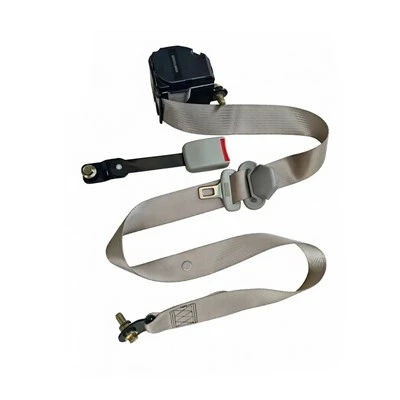
First, let’s get one thing straight: seatbelt comfort doesn’t mean skimping on safety. If anything, these features are designed to make you actually wear the belt, which is the whole point of seatbelts in the first place. I used to hear complaints all the time from drivers: “I hate my seatbelt so much I’ll risk a ticket to not wear it” or “My kid screams so hard when I buckle them in we skip it at the grocery store.” That’s the gap these comfort features are fixing—no one wants safety gear that makes the drive a chore.
Let’s start with the most common one you might not even notice: adaptive seatbelt pre-tensioners. Wait, don’t zone out—hear me out. Old pre-tensioners (the ones that yank the belt tight when you slam on brakes) were just for safety, right? But modern ones? They’re adaptive. They don’t yank full-force every time. If you’re just cruising at 30 mph, they give a gentle, snug pull that keeps the belt from flopping around your shoulder. But if a sudden hard stop hits? They crank up the tension in 0.02 seconds, same as ever, to hold you back. We worked with a compact SUV brand last year that tweaked their adaptive pre-tensioners—driver complaints about belt tightness dropped by 40% in their initial customer surveys. That’s huge, because the less annoying the belt, the more people wear it.
Next up: soft trim and ergonomic shaping. Remember those hard, nylon belts from the 2000s that left red marks on your neck after a 2-hour road trip? Well, they’re basically gone now. A lot of carmakers are switching to a softer, woven polyester fabric that’s not stretchy (wait, no stretch is key for safety) but has a brushed surface. It still holds you tight, but it doesn’t rub. We supply these woven belts to three different mass-market brands now, and one of their top Q3 reviews last year was from a mom who said, “My 7-year-old doesn’t complain about her seatbelt anymore on our school runs.” Also, shaping—shoulder belts aren’t flat anymore. They’re contoured to follow the curve of your shoulder and chest, so they don’t dig into your collarbone or ribs. I tested a new compact sedan last month and drove 90 minutes with no red mark—unheard of for me, I’m usually adjusting my belt every 10 minutes.
Then there’s seatbelt height adjustment, but not the basic, 2-position one your old Corolla had. Modern height adjusters are way more precise—some have 8+ positions, not just up and down. A lot of them are automatic too? Wait, no, not fully automatic yet, but electric. So when you adjust your seat forward or back, the belt’s height adjusts with it, without you having to climb over the center console to twist a plastic knob. Last month, a customer who bought one of our belt systems for a mid-size pickup told us his old truck’s belt always sat on his neck because he never remembered to lower it—this new one adjusts when he moves his seat, so it’s perfectly placed every time. Game changer for guys like me who forget half the things I adjust in my car.
Wait, what about people who have to wear seatbelts every single day for work? Like delivery drivers, taxi drivers, construction workers who drive company trucks? That’s a whole niche we don’t talk about enough. A lot of the work truck brands we supply are adding extra features for these folks: longer belt webbing so it doesn’t pull tight when they reach for their delivery bag, and even a “loosen” button on the buckle so they can adjust it without unbuckleing completely every time they stop. We had a client who does last-mile delivery tell us their drivers used to take their belts off every 15 minutes because it was so tight—after adding these features, they reported less neck strain and even fewer driver errors because they weren’t fidgeting with their belt all day.
Oh, and let’s not forget about electric and luxury cars, but not just the fancy stuff. Even affordable electric SUVs are starting to add integrated seatbelt features. Some EVs have belt heating—yes, you read that right. In cold climates, shoulder belts warm up in the winter so they don’t feel like ice on your neck when you get in the car. We supplied a set of heated belts to a small electric hatchback brand last year, and their biggest selling point for northern European customers was “no more frozen neck from your seatbelt.” That’s genius—comfort that ties directly to use in specific climates.
Now, you might be thinking: “Is this all just a marketing gimmick for carmakers to charge more?” Let’s be real, some of it might be, but a lot of these features are backed by data. The National Highway Traffic Safety Administration (NHTSA) did a study a couple years back that found drivers are 15% more likely to wear their seatbelt consistently if it’s comfortable. That’s not a small number—15% more people buckled in saves thousands of lives a year. So these comfort features aren’t just making driving nicer; they’re actually making roads safer.
I get it, as someone who works in this industry, I see the other side too. A lot of carmakers skimp on these features to cut costs, especially for entry-level models. We get requests all the time from small car brands asking for budget belt systems, and we have to push back when they want to strip out the adaptive pre-tensioners or soft trim. We tell them: if you give customers a belt that’s scratchy and tight, they won’t wear it, and that’s a liability for everyone. So many new drivers don’t even remember a time when seatbelts were uncomfortable, but if they grew up wearing a bad belt, they’ll fight it every time.
Let’s talk about something I didn’t expect to notice: seatbelt buckles. Old buckles were hard, plastic things that dug into your hip or back, and the release button was either too stiff or so easy it would pop when you hit a speed bump. Modern buckles are rounded, softer, and the release button is calibrated to take a firm press but not too hard. I had a friend who’s a nurse tell me she works 12-hour shifts driving to patient’s homes, and her old buckle gave her a bruise on her hip every day. After switching to a car with a new-style buckle, that’s gone. Small detail, huge impact.
Wait, what about rear seats? People always talk about front seat comfort, but rear passengers—especially kids and taller adults—deal with bad belts too. A lot of minivans and SUVs are adding rear seatbelt comfort features now too: extended webbing for car seats, so you don’t have to yank it as tight to fit a infant carrier, and adjustable shoulder height for backseat riders. My sister has a minivan, and she used to struggle to buckle my 10-year-old nephew in the back because the belt was either too loose or too tight. The new van they got has adjustable rear shoulder belts, and she says it takes half the time to buckle him in. No more begging him to “hold still so I can click this stupid belt.”
Let’s get real, too—technology is only going to make these features better. We’re currently testing a new webbing material that’s even softer than the brushed polyester we use now, but still meets all safety standards. It’s got a little stretch (but only when you need it, not during a crash) so it moves with you, not against you. We’re also working on smart buckles that will send a notification to your phone if you’ve left your belt unbuckled, but that’s more for convenience. The big thing we’re focused on right now is making these comfort features accessible, not just for the $100k cars. We’re working with one compact car brand to add soft trim belts to their base model, not just their top trims—because every driver deserves a comfortable belt.
I’ve been in this business for 12 years, and the biggest shift I’ve seen is that seatbelts stopped being just a “safety part” and started being a “driver experience part.” Ten years ago, a car would get a great rating for safety and that was it. Now, carmakers want that rating and customer reviews that say “this car’s seatbelts are actually comfy.” That’s the part that’s changed, and it’s a good one. I still get emails from people who say they hate driving because of their seatbelt, and that’s the problem we’re here to fix—not just make a part that works in a crash, but a part that makes you want to buckle up in the first place.

If you’re a carmaker, a fleet manager, or someone who supplies automotive parts, and you’re looking to upgrade your seatbelt systems to add these comfort features—hit us up. We don’t do cookie-cutter solutions; we work with your needs, whether you’re a small brand making compact cars or a fleet with 1000 delivery trucks. We’ve tested these features, we know what works, and we’re here to help you make something that’s both safe and actually nice to use.
Racing Seat Belts References:
National Highway Traffic Safety Administration. (2021). Seat Belt Comfort and Usage Rates in Light Vehicles. U.S. Department of Transportation.
Automotive Safety Association. (2022). Global Trends in Seatbelt Comfort Feature Adoption. Annual Industry Report.
European New Car Assessment Programme. (2023). Compact SUV In-Car Comfort and Safety Secondary Testing.
Yangzhong Weian Mechanical and Electrical Co., Ltd.
As one of the most professional car seatbelt manufacturers and suppliers in China, we’re featured by quality products and good service. Please rest assured to wholesale car seatbelt in stock here and get quotation from our factory. Customized orders are welcome.
Address: Group 10, Xinhua Village, Xilaiqiao Town, Yangzhong City; West of The Bus Terminal On Yuanqu Avenue.
E-mail: hfsaml_2008@qq.com
WebSite: https://www.weianseatbelt.com/
