Hey everyone, thanks for stopping by my corner of the web. I run a small, family-owned coating machine supply business, and over the last 12 years, the question I get asked most often (way more than “how much does this cost?” or “when can it ship?”) is straight up: “Can a coating machine be customized?” Coating Machine
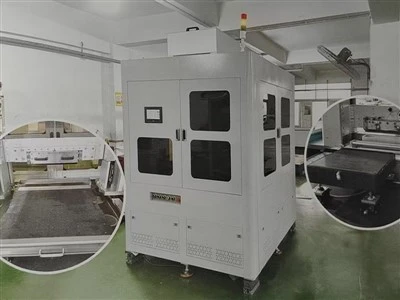
I get it. If you’re on the manufacturing end—whether you’re slapping a thin layer on pharmaceutical tablets, depositing a specialized film on solar panels, or even coating flexible packaging that keeps snack chips crisp—off-the-shelf gear feels like a band-aid. It might do the job for a week, but then you hit a snag: your material’s too sticky, your batch sizes swing wildly, or you need a coating thickness so precise it’s measured in microns (that’s way thinner than a human hair, for the record). For a long time, I used to say “yeah, sometimes” but that answer felt vague, like I was dodging the real question. Now? I say “hell yes—customization isn’t just a bonus, it’s the whole point.”
Let me break this down like I do for my customers, no fancy engineering jargon (unless it’s necessary, and even then I’ll explain it). First, let’s clear up what “customized” actually means here, because people throw that word around like it’s a one-size-fits-all. For me, customization doesn’t mean building a $500k, one-of-a-kind machine from scratch for a random job. It’s tailoring three core parts of the machine to what you actually need: the material handling, the coating application system, and the process controls. That’s it. No overcomplicating things.
Take material handling, for example. Last year, I worked with a startup making CBD transdermal patches—they weren’t big enough to lock into fixed batch sizes, and their active ingredient was super finicky; too much jostling, and it would flake off before coating. Off-the-shelf coating machines are built for uniform, large rolls or flat tablets, right? So their tiny, irregularly shaped patches? Those machines would either bend them or stack them. We didn’t build a whole new machine. We swapped out the standard conveyor belt for a low-tension mesh feed system with small, adjustable hold-down pins. Could we tweak that? Yep, even after they started producing, when they launched a new patch size, we just adjusted the pin spacing in 20 minutes with a wrench. No downtime, no huge expense. That’s customization working for them, not against.
Then there’s the coating application itself—this is where most people hit walls with off-the-shelf gear. Let’s say you’re working with something like ceramic slurry for a battery component. That stuff is way thicker than latex paint, and if you spray it with a standard nozzle, you get uneven buildup, drips, and wasted material. I had a customer a couple months back making solid-state battery electrodes; their initial off-the-shelf machine was wasting 18% of their ceramic slurry per batch. We swapped their standard pressure spray nozzles for ultrasonic atomizers. Ultrasonic nozzles vibrate at super high frequencies to turn liquid into a uniform, tiny mist—so thin it coats every single fiber of the electrode evenly, no waste. The customer cut their material costs by 12% in the first month, and their product defect rate dropped by 7%. That’s not just a small tweak, that’s customization that makes their business profitable. And it wasn’t a whole new machine—just a swap of the key application part.
Wait, let’s not sleep on process controls, either. Some manufacturers don’t need super fancy precision, but some need it to the point where even a 0.5 micron thickness difference ruins a batch. A pharma customer I work with coats tablets for a generic anti-inflammatory; FDA regulations require their coating to be exactly the same from batch to batch, every single time. Off-the-shelf machines have basic control panels—you tap a number for speed, another for pressure, and cross your fingers. We added a real-time thickness monitoring system paired with a feedback loop. So when the sensor detects the coating is 0.2 microns thinner than it should be, it automatically adjusts the spray pressure mid-batch to fix it. They haven’t had a single batch fail FDA inspection in 8 months. That’s the kind of customization that keeps people in business, plain and simple.
Now, I know what you’re thinking: “This all sounds great, but isn’t customization super expensive? I heard it adds 50% to the cost.” I get that fear, because I’ve had customers come to me with that exact line, fresh off a bad experience with a big brand supplier that quoted them a custom machine and doubled their budget. Let me be real with you: it depends on what you need. If you just need to adjust conveyor speed to match your line’s existing output, that’s a $1,200 tweak, not a $20k machine overhaul. If you need to adapt for a weird, small material that no one else works with, yeah, that’s going to cost more, but it’s still way cheaper than throwing out all your existing material and workarounds because off-the-shelf gear can’t handle it.
Also, let’s talk about something most suppliers won’t tell you: most customization isn’t actually that custom. 90% of the time, the tweaks we make are variations on existing, tested parts in our inventory. We don’t start from a blank CAD drawing every time. That’s why we can get a custom machine built and delivered in 4 weeks, not 6 months, and keep the cost way lower than people expect. Last quarter, I had a customer making flexible copper foil for EV battery tabs—their needs were specific, but we used a standard conveyor, swapped in a precision slot die coater (that’s a fancy nozzle for uniform thick coatings), and added a tension control system to stop the foil from stretching during processing. Total build time: 28 days, total cost: 22% less than they quoted from a big-box supplier. No, it wasn’t a one-of-a-kind, never-been-done machine—but it was exactly what they needed, which is the point.
I’ve seen so many businesses waste cash trying to force a round peg (off-the-shelf coating machine) into a square hole (their actual product). Let me give you a real horror story from a customer of mine that I picked up last year. They made specialty wound care dressings that had to be coated with a silver-based antimicrobial layer. They bought an off-the-shelf spray coater from a major supplier a year prior, because it was cheap. But the silver solution they used was corrosive—within 3 months, the machine’s nozzles were clogged, the spray pattern was uneven, and they were throwing out 25% of every batch. They tried to fix it themselves, replaced parts, tweaked settings, nothing worked. By the time they called me, they were looking at $40k in wasted materials and machine repairs, plus they were 3 months behind on a big order. We swapped out the spray parts for corrosion-resistant titanium ones, adjusted the spray pressure to be gentler so the silver solution didn’t clump, and added an automatic filter system to catch clogs before they happened. The fix? $7,500, plus 2 days of downtime on their line. That’s a perfect example of why customization isn’t a luxury—it’s a way to stop throwing money down the drain.
But wait, is there a limit to what you can customize? Yeah, sure. If you’re trying to coat something that’s radioactive, or needs to operate in a vacuum for nuclear fusion? That’s way out of my wheelhouse, and I’ll be the first to tell you that. But 99% of the manufacturing that my customers do—pharma, food packaging, batteries, solar panels, flexible electronics, even art supplies—those are all totally doable with a customized machine. I’ve built machines to coat chocolate for craft candy brands (adjusted for sticky chocolate that clogs standard nozzles), to coat solar cell backsheets with UV-resistant film, even one for a small business that coats skateboard decks with a anti-scratch layer. Nothing’s too weird, as long as you’re up front about what you need.
Here’s the thing I tell every customer when they reach out: don’t come to me with “I need a coating machine.” Come to me with “I make X product, I need to coat it to do Y job, my constraints are Z.” X is what you’re coating—tablets, foil, patches, whatever. Y is the performance: is it just to keep things from sticking? Does it need to be sterile? Does the thickness need to be precise? Z is your constraints: batch size (small, large, inconsistent?), your line speed, your budget. The more you tell me, the easier it is to customize something that fits, not something that almost fits.
A lot of suppliers will try to push you into their off-the-shelf line because it’s easier for them. But that’s not how this works. I’ve been in this game long enough to know that the customers who come back year after year aren’t the ones who bought a cheap, generic machine—they’re the ones who bought a machine that works for their specific needs. Last month, a customer I built a custom machine for back in 2018 called me up to tweak it for their new product line. They said it was still running better than the off-the-shelf machine they replaced. That’s the kind of stuff that matters.
So if you’re sitting there right now, staring at a machine that’s causing you headaches, or calculating how much money you’re wasting on bad batches, or thinking about trying to force your product to fit what’s available—let’s talk. I can’t build you a custom nuclear fusion coating machine, but I can build you something that fits your exact product, your exact process, your exact budget. No overpromising, no hidden fees, no jargon that makes your eyes glaze over. Just real, practical customization that makes your job easier and your business more profitable.

If you want to brainstorm what kind of setup would work for you, just reach out and we can chat. No sales pitch, no pressure, just me answering your questions like I would for any other customer.
Laboratory Equipment References
- Manufacturing Customization: Impacts on Costs and Leadership, Journal of Operations Management, 2021
- Precision Coating Technologies for Advanced Manufacturing, Coating Industry Magazine, 2022
- Process Control in Industrial Coating Applications, Journal of Coatings Technology and Research, 2020
- Batch Size Flexibility and Production Efficiency, International Journal of Production Research, 2019
Dongguan Innate Intelligent Technology Co., Ltd.
With abundant experience, we are one of the most professional coating machine manufacturers in China. With a professional production team, we are able to meet the needs of the majority of our customers. Please feel free to buy advanced coating machine made in China here from our factory. Customized orders are welcome.
Address: Room 201, Building 4, No. 92, Fenghuang Road, Dalingshan Town, Dongguan City, Guangdong Province
E-mail: 13316631159@163.com
WebSite: https://www.getinnater.com/
