Hey everyone, let’s cut to the chase—if you’re here, you’re either neck-deep in water purification for a lab, pharmaceutical plant, or even a semiconductor fab, and you’ve probably been Googling “EDI pressure requirements” more times than you can count. I’m not a textbook, I’m a guy who’s been selling EDI and CEDI equipment for over a decade, troubleshooting 2 a.m. breakdowns, and answering panicked calls from clients who blew out their first EDI stack because they guessed wrong on pressure. Let’s break this down like we’re chatting over a coffee (the good kind, not that office swill). EDI and CEDI Equipment
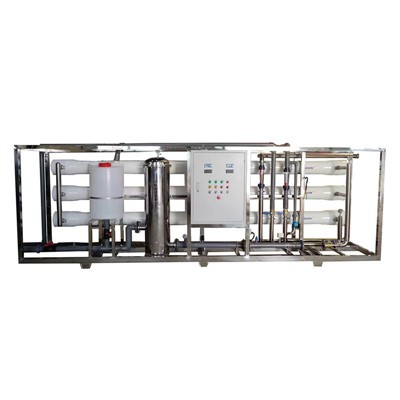
First off, let’s remember what EDI even is—Electrodeionization, right? It’s that fancy tech that takes RO water (reverse osmosis, the stuff that’s already 95% pure) and cranks it to 18+ MΩ-cm, perfect for high-purity uses like injecting sterile meds or rinsing semiconductor wafers. CEDI is just continuous electrodeionization, same tech, same pressure rules, just a different brand name some folks use. But here’s the thing that trips everyone up: EDI isn’t just pushing water through a filter. It’s a stack of alternating anion and cation exchange membranes, resin beads, and electrodes that pull ion contaminants out of the water and into a concentrate stream. That process needs pressure to work—but too much or too little, and your entire system’s toast.
Let’s start with the sweet spot—what’s the actual pressure requirement? Most standard EDI stacks (the ones we sell for general pharma, food and beverage, and mid-sized labs) run at 60 to 100 PSI. Wait, hold on—don’t just nod and close the tab, because that’s a range, not a hard number. And before you ask, no, that’s not random. The pressure is the key two-part role here: first, it pushes the product water through the membranes, and second, it creates the pressure differential needed to separate the pure water from the concentrate and reject brine. If you’re running a smaller lab EDI unit? Maybe 50 to 80 PSI is enough, since those stacks are shorter, don’t need as much force to move water. If you’re a big semiconductor plant with a 10-foot-tall CEDI stack? You might be at 80 to 110 PSI, max.
But here’s the part most people miss—feedwater quality directly impacts pressure needs. If your RO feed is trash, like, has more than 10 NTU of turbidity or leftover chlorine (super bad for EDI resin), you’re going to have to tweak pressure. If your RO product water is spot-on—below 0.5 NTU, less than 0.1 ppm chlorine, 1-5 ppm TDS—you can nail that sweet spot of 65-85 PSI without issue. I once had a client who swore their EDI manual said 70 PSI, so they kept it there even though their RO water was only 2 ppm TDS and they were getting 12 MΩ-cm instead of 18+. When they bumped it up 10 PSI? Bam, shot right up to 18.2. Turns out their manual used average feed specs, so when their water was extra pure, they needed a little more pressure to get that ion movement going.
Now, the big no-nos—too low, or too high. Let’s start with too low. If you’re below 50 PSI, here’s what happens: the water doesn’t push hard enough through the stack, so the concentrate stream doesn’t flow properly. That means ions get trapped, not pulled out, and you end up with product water that’s only moderately pure, or worse—you get fouling in the resin. I’ve had a client who ran at 45 PSI because they thought lower pressure = longer stack life. Instead, they had to replace their entire EDI stack 18 months early, because ion buildup made the resin useless. Dumb move, and totally avoidable. What’s the fix? Add a simple pressure booster pump. It’s a $500 part, way cheaper than a new $10k stack.
Too high? That’s even scarier. Most standard EDI stacks have a max pressure rating of 120 PSI. If you go over that, you’re risking membrane rupture, cracked end plates, or even blown seals. I’ve seen a stack go from 100 PSI to 130 PSI because a pressure regulator failed, and by the time we got there, half the resin was leaking out the concentrate line. That cost the client $8k in repairs and downtime. And it’s not just immediate damage—running at 115+ PSI on the regular wears out the stack faster, cuts its lifespan from 3-5 years to 18-24 months. So always, always install a pressure relief valve set to 110 PSI—takes 10 minutes and saves you a ton of cash.
Wait, what about when you have variable feedwater? Like, if your water source is a well that changes TDS day to day? That’s when you need a pressure regulator that can adjust on the fly. Some cheaper EDI systems come with a fixed regulator, and that’s a recipe for disaster. We sell our EDI units with a digital pressure transmitter that adjusts the pressure based on feed TDS, so if your TDS spikes, it bumps pressure 5 PSI to keep the performance up. No more manual tweaks, no more guessing.
Another thing that’s often confused—pressure vs. flow rate. People mix these up all the time. Pressure is force pushing water through, flow is how much water moves per minute. You can have 80 PSI and 5 GPM, or 80 PSI and 10 GPM, and the pressure requirement stays the same (as long as flow is within the stack’s rated range). I once had a client who called us panicking, saying their pressure was 80 PSI but flow was too low, so they cranked pressure to 130. Nope—they just had a clogged filter cartridge, so flow was restricted, not pressure. Fixed the filter, flow came back, pressure stayed perfect.
Oh, and for CEDI folks? Same rule applies. The “C” just stands for continuous, so it’s the same EDI tech in a different casing, usually for higher-capacity systems. I’ve got a 150 GPM CEDI stack that runs at 90 PSI, no issues, and another 20 GPM CEDI for a pharmaceutical plant that hits 75 PSI. Never had a pressure problem with either, because we sized the pressure regulator correctly for their feed specs.
Wait, let’s talk about startup pressure, too. When you first fire up a new EDI stack, you don’t just crank it to 80 PSI right away. You start at 50 PSI, let the resin soak for 30 minutes, then bump it up 10 PSI every 10 minutes until you hit the operating range. That prevents any shock to the membranes, which extends their life. I learned that the hard way with a first-gen EDI stack I installed back in 2012—cranked it to 90 PSI on startup, and the concentrate line sprung a leak within an hour. Oops. Never made that mistake again.
What about if you’re working with low-pressure RO? Like, some small lab RO systems that only push 40 PSI? That’s fine—you just need a booster pump to get up to the 50+ PSI minimum. We include a compact booster pump in our small lab EDI kits, because we don’t want our clients to have to source extra parts. For larger systems, we integrate the booster into the EDI skid, so it’s all pre-plumbed and tested before it leaves our warehouse.
Here’s a quick cheat sheet I give all my clients, to avoid the common mistakes:
- Standard EDI stacks (10-100 GPM): 60-100 PSI operating pressure
- Small lab EDI (under 10 GPM): 50-80 PSI
- Max pressure for any EDI/CEDI stack: 120 PSI
- Always maintain a pressure differential of 10-15 PSI between product and concentrate lines (prevents backflow)
- Never operate below 50 PSI, unless you’re running a super tiny, low-flow stack (we test those on a case-by-case basis)
And one last thing—don’t trust the manual alone. Manuals give general ranges, but your actual pressure depends on your specific feedwater. If your RO water is extra pure (1 ppm TDS), you might need a little more pressure. If it’s on the higher end (5 ppm TDS), you might be at the lower end of the range. If you’re not sure, just shoot us a message—we’ll walk you through testing your feedwater and dialing in the perfect pressure, no sales pitch, just straight answers.
At the end of the day, EDI pressure isn’t rocket science, but it’s not something you can guess at either. Too little, and you get poor water quality and early stack failure. Too much, and you blow parts and waste money. The sweet spot is there, you just have to find it for your specific setup. We’ve installed hundreds of EDI and CEDI systems over the years, and 90% of the pressure-related issues we troubleshoot come from someone either not checking their feedwater or running pressure outside the recommended range.
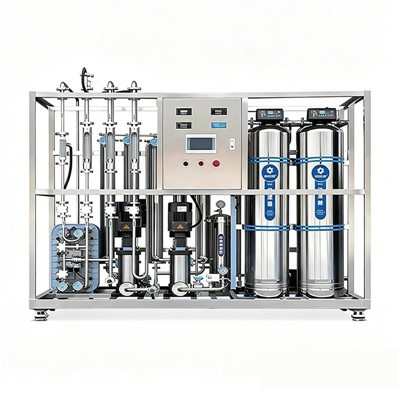
If you’re sizing a new EDI system, or having pressure-related problems with your current setup, feel free to reach out to our team to chat through your needs. We don’t do one-size-fits-all, we work with you to get the right pressure and performance for your water purification goals. We’re not here to sell you the biggest stack, we’re here to make sure your EDI works right, without the headaches.
Reverse Osmosis Water System References:
- American Water Works Association. (2020). Electrodeionization Technology for Water Purification. AWWA Manual of Water Supply Practices.
- Lacey, R. E., & White, L. S. (2018). Continuous Electrodeionization: Principles, Operation, and Applications. Journal of Membrane Science and Technology.
- Eaton, A. D., et al. (2017). Standard Methods for the Examination of Water and Wastewater (23rd ed.). American Public Health Association.
- Ionpure Technologies. (2019). EDI System Design and Operating Guidelines. Technical Bulletin TB-EDI-0019.
- World Health Organization. (2021). Guidelines for Drinking-water Quality, 4th ed. Update on Desalination and Advanced Purification Technologies.
Shandong Yanuo Environmental Protection Equipment Co., Ltd.
We’re well-known as one of the leading edi and cedi equipment manufacturers and suppliers in China, featured by quality products and good price. Please rest assured to buy bulk edi and cedi equipment made in China here from our factory. Customized orders are welcome.
Address: North Side of the Road, 1,000 Meters West of the Intersection of Fenghuangshan West Road and Provincial Highway S102, Wangfu Subdistrict, Qingzhou City, Weifang City, Shandong Province.
E-mail: ynhb.499973983@gmail.com
WebSite: https://www.zkyaruo.com/
