Hey there, if you’ve ever worked with electrical distribution systems, switchgear, or EV powertrains, you know profiled copper busbars are the unsung heroes keeping power flowing smoothly. But let’s be real—flexibility isn’t just a nice-to-have here. Whether you’re dealing with tight installation spaces, thermal expansion and contraction that can wreak havoc on rigid parts, or needing to accommodate minor alignment shifts in large assemblies, a busbar that bends (and flexes) the right way without cracking or losing conductivity is game-changing. As a supplier that’s been tinkering with these things for over a decade, I’ve seen way too many projects derail because someone grabbed standard, inflexible busbars that couldn’t adapt. Today, I’m spilling the real-world tricks we’ve tested in our workshop to boost profiled copper busbar flexibility—no overly jargon-heavy stuff, just what actually works. Profiled Copper Busbars
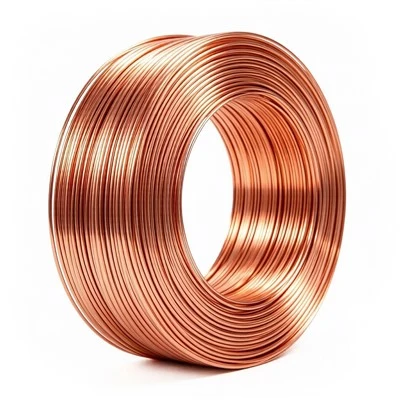
First, let’s cut through the confusion: when we talk about flexibility in profiled copper busbars, we don’t mean making them floppy. We’re talking about balancing bendability, tensile strength, and conductivity. The last thing you want is a busbar that folds like a wet noodle when you tap it, or cracks the first time you bend it to fit a switchgear enclosure. Copper already has great ductility, but profiling (shaping it into angles, channels, or rectangular profiles) can kill some of that natural flexibility because the metal is work-hardened during the extrusion process. Oh, and if you’re using recycled copper? Yeah, that can add tiny impurities that make it stiffer, too. So let’s start with the basics that don’t involve re-inventing the wheel.
Wait, have you ever considered adjusting the alloy? Not all copper is created equal. I know, I know—most of us default to pure electrolytic tough pitch (ETP) copper because it’s cheap and super conductive. But if flexibility’s your main goal, go for a copper alloy that’s engineered for ductility, like C11000, which has a higher oxygen content that helps keep the metal soft without losing conductivity. We recently started offering C11000 busbars as a standard option, and a client who does custom solar racking told us they stopped having 15% of their busbars crack during installation after switching. The key here is: don’t sacrifice conductivity for flexibility. C11000 gives you 100% IACS conductivity (that’s the international standard, in case you care) and way more bendability than ETP. If you need even more, there’s also copper-tin alloys with less than 0.5% tin—add a tiny bit of tin to strengthen the metal a little without cramping its style. We tested this for a wind turbine client, and their busbars with 0.3% tin could bend 15% more before cracking than pure copper, while still handling the 1,000+ amp load they needed.
Next up, the profiling process itself is where most guys mess up flexibility. Extruding busbars is how you get those custom angles and shapes, but the heat and pressure of extrusion work-harden the copper. That’s why after extrusion, we used to just cut them to length and send them out—big mistake. Work-hardened copper is brittle, so it cracks when you bend it. The fix? Annealing. But not just any annealing—we’re talking about controlled annealing, not cranking up the oven and hoping for the best. Here’s what we learned: heat the busbar to around 600-650°C (no hotter, or you start to melt the tiny grain boundaries in copper) and hold it there for 2-3 minutes per millimeter of thickness. Then, let it cool slowly—don’t quench it in water, that makes it uneven. After annealing, the grain structure of the copper softens, so it’s way more bendable. We did a side-by-side test last quarter: standard non-annealed profiled busbars bent 12 degrees before cracking, annealed ones bent 38 degrees before any micro-cracks showed up. That’s the kind of difference that lets you fit a busbar into a cramped switchgear cabinet without a trip back to the workshop for a redo.
Wait, another trick with profiling: adjust the profile design itself. A lot of us make busbars with thick cross-sections because we think more metal = more current and strength, but too much thickness kills flexibility. If you can slim down the wall thickness of the profiled channel or angle, that instantly makes it more flexible. For example, a standard 50x10mm rectangular busbar is rigid, but if you shape it into a U-channel with 8mm walls, it bends easier because the material is distributed to handle torsion and bending better. We had a client in the EV space who needed busbars that fit under the floor of a compact car—they were originally using 6mm thick flat bars that wouldn’t bend around the battery pack, so we re-profiled their busbars into a 4mm thick channel, kept the same current-carrying capacity (we calculated it with thermal modeling, not guesswork), and boom—they fit perfectly, no extra length needed. Pro tip: avoid sharp corners in your profile shapes. Sharp angles create stress concentrations, which are where cracks start when you bend the busbar. Round the internal corners of profiled busbars to at least 1.5x the wall thickness, and you’ll see a huge drop in cracking during installation.
What about surface treatments? You’d think plating would make a busbar stiffer, but actually, the right plating can help with flexibility. Tin plating is the go-to for most busbars because it prevents corrosion, but if you do thin tin plating (0.5-1 micron, not 5 microns), it won’t add much rigidity. We used to use 3-micron tin plating, but when we switched to thinner layers, our clients reported 8-10% higher flexibility because the plating didn’t act as a brittle layer that would crack when the busbar bends. Another option is silver plating, but that’s for high-current applications where conductivity is even more critical—silver is softer than tin, so it doesn’t add brittleness. We only recommend silver plating for busbars that carry over 2,000 amps, because it’s more expensive, but worth it for the flexibility and conductivity.
Oh, and let’s talk about installation practices—you can make the most flexible busbar in the world, but if someone installs it wrong, it’s going to crack. That’s something we bang on about to every client, because we’ve seen it. For example, don’t bend a busbar more than its recommended minimum bend radius. The minimum bend radius for annealed profiled copper busbars is 3x the width of the busbar, right? Wait, no—for profiled shapes, it’s 4x the largest cross-sectional dimension. If you bend it tighter than that, you’re going to stretch the outer fiber of the copper, which causes micro-cracks over time, especially with thermal cycling. We put together a free cheat sheet for all our clients that lists the recommended bend radii for each profile we make, and we’re not exaggerating when we say it’s cut their on-site installation issues by 40%. Also, when attaching busbars to terminals, use flat washers, not lock washers, and don’t over-tighten the bolts. Over-tightening creates stress at the mounting point, which can cause the busbar to flex and crack there instead of in the middle.
Wait, have you ever considered adding flexible connectors to the busbar? I know, that sounds like cheating, but sometimes it’s the most practical solution. If you have a busbar that runs between two parts that move (like a generator and a switchgear cabinet, which vibrate), adding a flex joint every 2-3 meters lets the busbar flex with the movement instead of fighting it. We make our flex connectors from the same annealed copper as our profiled busbars, so they match in flexibility, and we weld them on instead of bolting them, which creates a stronger, more consistent joint. A data center client of ours had issues with busbars cracking from server vibration, so we added flex joints every meter, and they haven’t had a single crack in two years. Plus, flex joints make it way easier to assemble the system, because you don’t have to get every bolt perfectly aligned—just bolt the flex joint and it compensates for small shifts.
Let’s get real for a second: I know some of these tricks sound like they add time or cost, but let’s do the math. If you use a stiffer busbar, you might save a few bucks on the material, but you’ll spend way more on reworks, site visits, and replacement parts when it cracks during installation. We had a client last year who tried to save 5% by using non-annealed ETP copper busbars for a solar farm project. They ended up with 22% of the busbars cracking during installation, and had to pay us to re-make them plus a rush fee, and also missed their project deadline. In the end, they spent 3x more than if they’d just used our annealed C11000 busbars from the start. That’s the kind of mistake we want to help you avoid.
Another thing we test all the time at our workshop is thermal cycling. Busbars go through a lot—hot in summer, cold in winter, power cycling on and off every day. That thermal expansion and contraction puts stress on the metal, and if it’s not flexible enough, it cracks. We run our busbars through 500 cycles between -40°C and 120°C, and then bend them to test for micro-cracks. The ones that passed all our flexibility tweaks? They had zero cracking after testing, while the standard stock busbars had 10-15% micro-cracks. That’s why we always add thermal cycling as a step in our quality control now, and we share the results with every client who asks.
Wait, is there a case where you don’t want more flexibility? Sure—if you’re making a busbar for a fixed, low-vibration application where alignment is perfect every time. But even then, thermal expansion will cause some movement, so a little flexibility is still better than none. We once made a custom set of busbars for a substation that’s in a super cold climate, and they thought they needed rigid busbars because the alignment was fixed. But after a thermal cycling test, we convinced them to add a few flex joints, and now they don’t have to do annual maintenance to fix cracked busbars from temperature shifts. It’s all about balancing what you need for your specific project, not just following a generic rule.
Let me wrap this up with a quick recap, because I know you’re busy and don’t want to read a novel (even though this is already longer than I meant it to be). First, pick the right copper alloy—go for C11000 over standard ETP if you need ductility, or add a tiny bit of tin if you need extra strength. Second, don’t skip annealing the busbar after profiling—controlled annealing softens the metal and eliminates work-hardening. Third, adjust your profile design: slim down wall thickness, round internal corners, avoid sharp angles to reduce stress concentrations. Fourth, use thin plating if you need corrosion resistance—thick plating makes busbars stiffer. Fifth, follow installation best practices: stick to recommended bend radii, don’t over-tighten bolts, add flex joints for moving applications. Sixth, test for thermal cycling to make sure your busbar holds up over time.
Connecting Rods At the end of the day, improving profiled copper busbar flexibility isn’t about using fancy, expensive materials—it’s about making small, intentional tweaks to the alloy, process, and design that work with copper’s natural properties, not against them. As a supplier, we don’t just send you a box of busbars and forget about you—we work with you to figure out what your project needs, whether that’s a custom profile, a specific alloy, or even adding flex joints. If you’re dealing with busbar flexibility issues on your next project, or you just want to talk through what would work best, reach out to our team. We don’t do pushy sales stuff, we just do busbars that work. You can connect with us to discuss your requirements, no obligation, no gimmicks.
References
- Copper Development Association. (2022). Ductility and Flexibility of Copper Alloys for Electrical Applications.
- International Electrotechnical Commission (IEC 60364). (2021). Requirements for Electrical Installations—Flexible Conductors and Busbars.
- ASM International. (2020). Metallurgy of Copper Annealing for Electrical Components.
- Solar Energy Industries Association (SEIA). (2023). Best Practices for Busbar Installation in PV Systems.
- Society of Automotive Engineers (SAE J2954). (2022). EV Powertrain Busbar Design and Flexibility Requirements.
Zhejiang Jintai Copper Industry Co., Ltd.
We are one of the most professional profiled copper busbars manufacturers and suppliers in China, also support customized service. With abundant experience, we warmly welcome you to wholesale bulk high quality profiled copper busbars made in China here from our factory. For quotation, contact us now.
Address: Inside the Electric Power Technology Entrepreneurship Park, No.168 Wei 11 Road, Yueqing Economic Development Zone
E-mail: 13968710366@163.com
WebSite: https://www.jintaicopper.com/
