In the dynamic world of commerce, the concept of customization has become a significant trend, with consumers increasingly seeking products that cater to their unique needs and preferences. As a non – custom product supplier, I often find myself in conversations with clients who wonder if our non – custom offerings can be customized to some extent. In this blog, I will delve into this question from multiple perspectives, exploring the feasibility, challenges, and potential benefits of introducing a certain degree of customization to non – custom products. Non-custom

Understanding Non – custom Products
Non – custom products, also known as standard products, are those that are mass – produced according to pre – defined specifications. These products are designed to meet the general needs of a broad customer base. They offer several advantages, such as lower costs due to economies of scale, shorter lead times, and consistent quality. For example, in the electronics industry, standard smartphones are produced in large quantities with a set of common features and specifications. This allows manufacturers to streamline production processes and keep prices competitive.
However, the one – size – fits – all nature of non – custom products may not always satisfy every customer’s requirements. Some customers may have specific functional, aesthetic, or performance needs that go beyond the standard offerings. This is where the idea of partial customization comes into play.
Feasibility of Customizing Non – custom Products
The feasibility of customizing non – custom products depends on several factors, primarily related to the product’s design, manufacturing process, and the nature of the requested customization.
Product Design
If a product’s design is modular, it may be relatively easier to customize. Modular design means that the product is composed of separate, interchangeable components. For instance, a piece of furniture like a bookshelf with modular panels can be easily customized by changing the number of shelves, their height, or the color finish. Each panel can be produced separately, and different combinations can be assembled according to the customer’s needs.
On the other hand, products with integrated or non – modular designs may pose more challenges. For example, a complex medical device with a highly integrated circuit board may be difficult to customize without significant re – engineering. The components are often designed to work in a specific way together, and any change to one part may affect the entire system’s functionality.
Manufacturing Process
The manufacturing process also plays a crucial role. If the production process is flexible, it may be possible to introduce some customization. For example, a 3D printing process can be more easily adapted to produce customized parts compared to traditional injection molding. 3D printing allows for the creation of unique shapes and designs with relatively low setup costs for each new product variation.
In contrast, traditional manufacturing methods that rely on large – scale, specialized machinery may be less flexible. For example, a factory that produces standard plastic bottles using a high – volume injection – molding machine may find it difficult to customize the shape or size of the bottles without significant investment in new molds and retooling.
Nature of the Requested Customization
The type of customization requested by the customer also determines feasibility. Simple aesthetic customizations, such as adding a logo, changing the color, or applying a label, are often easier to implement. For example, a clothing manufacturer can easily print a customer’s logo on a standard T – shirt.
However, functional customizations, such as adding new features or modifying the performance of a product, are usually more challenging. For example, customizing a standard laptop to have a much higher – capacity battery or a faster processor may require significant technical expertise and changes to the product’s internal design.
Challenges of Customizing Non – custom Products
While there is potential for customizing non – custom products, there are also several challenges that need to be considered.
Cost
One of the most significant challenges is the cost. Customization often requires additional resources, such as new materials, specialized labor, and potentially new equipment. For example, if a customer requests a custom – colored finish for a metal product, the manufacturer may need to purchase special paint and train workers on the new painting process. These additional costs can make the customized product significantly more expensive than the standard version.
Time
Customization can also increase lead times. Designing and implementing custom features or modifications takes time. For example, if a customer wants a custom – designed software application to be integrated with a standard hardware device, the development and testing of the software can add weeks or even months to the delivery time. This can be a problem for customers who need the product quickly.
Quality Control
Maintaining quality control can be more difficult when customizing non – custom products. Each customization may introduce new variables that need to be monitored. For example, if a custom – made part is added to a standard product, there is a risk that it may not integrate properly with the existing components, leading to performance issues or product failures. Ensuring that the customized product meets the same high – quality standards as the standard version requires strict quality control procedures.
Benefits of Partial Customization
Despite the challenges, there are several benefits to offering a certain degree of customization to non – custom products.
Customer Satisfaction
Customization can significantly enhance customer satisfaction. When customers can get a product that better meets their specific needs, they are more likely to be happy with their purchase. This can lead to increased customer loyalty and positive word – of – mouth. For example, a customer who can customize the layout of a kitchen cabinet to fit their specific kitchen space is more likely to recommend the product to others.
Competitive Advantage
In a crowded marketplace, offering partial customization can give a supplier a competitive edge. It allows the supplier to differentiate their products from those of competitors who only offer standard, non – customizable options. For example, an automotive parts supplier that can offer customized engine parts may attract more customers who are looking for high – performance or specialized solutions.
Increased Revenue
Customized products often command a higher price than standard products. By offering customization options, a supplier can potentially increase their average revenue per sale. For example, a jewelry manufacturer that offers custom – engraved necklaces can charge a premium for the personalized service.
Strategies for Implementing Partial Customization
To successfully implement partial customization of non – custom products, suppliers can adopt the following strategies.
Offer a Limited Range of Customization Options
Rather than trying to offer unlimited customization, suppliers can define a limited range of options. This makes the customization process more manageable and helps control costs and lead times. For example, a furniture manufacturer can offer a choice of three different fabric colors and two different leg designs for a standard sofa.
Collaborate with Customers
Engaging in close collaboration with customers during the customization process is essential. This helps ensure that the customer’s requirements are clearly understood and that the final product meets their expectations. Suppliers can use customer feedback to improve the customization process and develop new options in the future.
Invest in Technology and Training
To make customization more feasible, suppliers may need to invest in new technologies and provide training to their employees. For example, implementing a computer – aided design (CAD) system can help in designing custom – made parts more efficiently. Training employees on new manufacturing techniques and quality control procedures is also crucial.
Conclusion
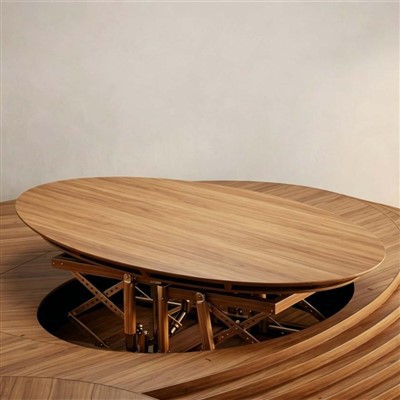
In conclusion, non – custom products can be customized to some extent, but the feasibility depends on various factors such as product design, manufacturing process, and the nature of the requested customization. While there are challenges associated with customization, such as cost, time, and quality control, the benefits, including increased customer satisfaction, competitive advantage, and revenue, make it a worthwhile consideration for non – custom product suppliers.
Stage Mechanical Equipment As a non – custom product supplier, I am open to exploring the possibilities of partial customization with our clients. We understand that every customer has unique needs, and we are committed to finding solutions that balance customization with cost – effectiveness and quality. If you are interested in discussing how we can customize our non – custom products to meet your specific requirements, please feel free to reach out to us for a procurement discussion.
References
- Pine, B. J. (1993). Mass Customization: The New Frontier in Business Competition. Harvard Business School Press.
- Gilmore, J. H., & Pine, B. J. (1997). The Experience Economy: Work Is Theatre & Every Business a Stage. Harvard Business School Press.
- Ulrich, K. T., & Eppinger, S. D. (2016). Product Design and Development. McGraw – Hill Education.
JIANGSU HONGBO STAGE EQUIPMENT SCIENCE AND TECHNOLOGY CO., LTD.
As one of the most professional non-custom stage equipment manufacturers and suppliers in China, we’re featured by quality products and good price. Please rest assured to wholesale bulk advanced non-custom stage equipment for sale here and get quotation from our factory. Customized orders are welcome.
Address: Dasi Industrial Park, Gaogang District, Taizhou City, Jiangsu Province
E-mail: hongbowutai@gmail.com
WebSite: https://www.hbstageequipment.com/
